What is Air Cargo Tracking?
Author:
Aashinya
Published On:
1 min read
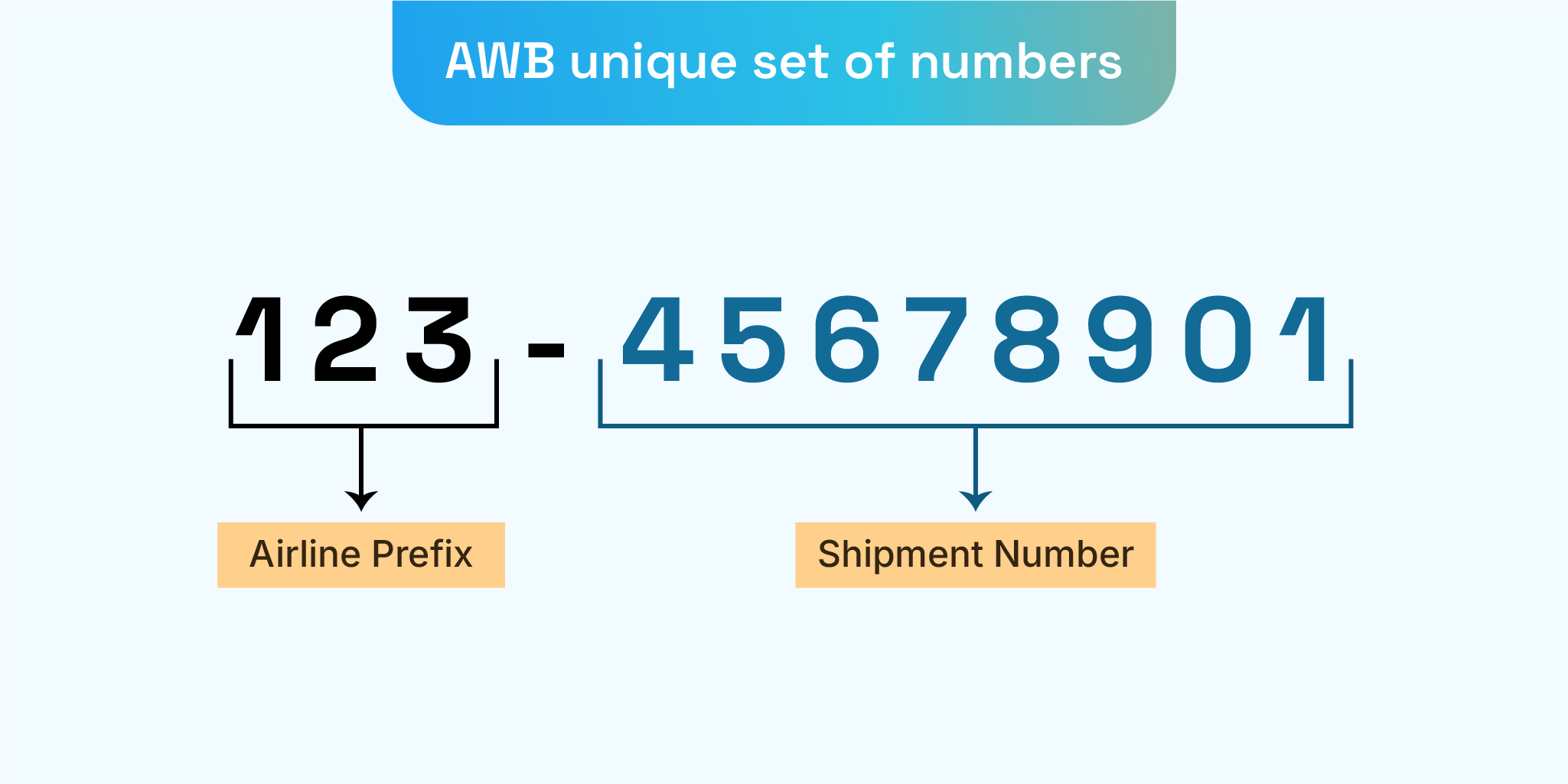
Air cargo tracking is the process of monitoring air freight shipments as they move from the origin to the destination. The tracking occurs through a unique set of numbers. The first three numbers reflect the airline prefix, and the rest eight digits represent the unique shipment serial number. For instance, in the AWB 123-45678901, 123 is the airline prefix and 45678901 is the shipment number.
Air Waybills are available in both physical and digital formats. However, most freight forwarders now prefer using e-AWB due to its efficiency and reduced paperwork.
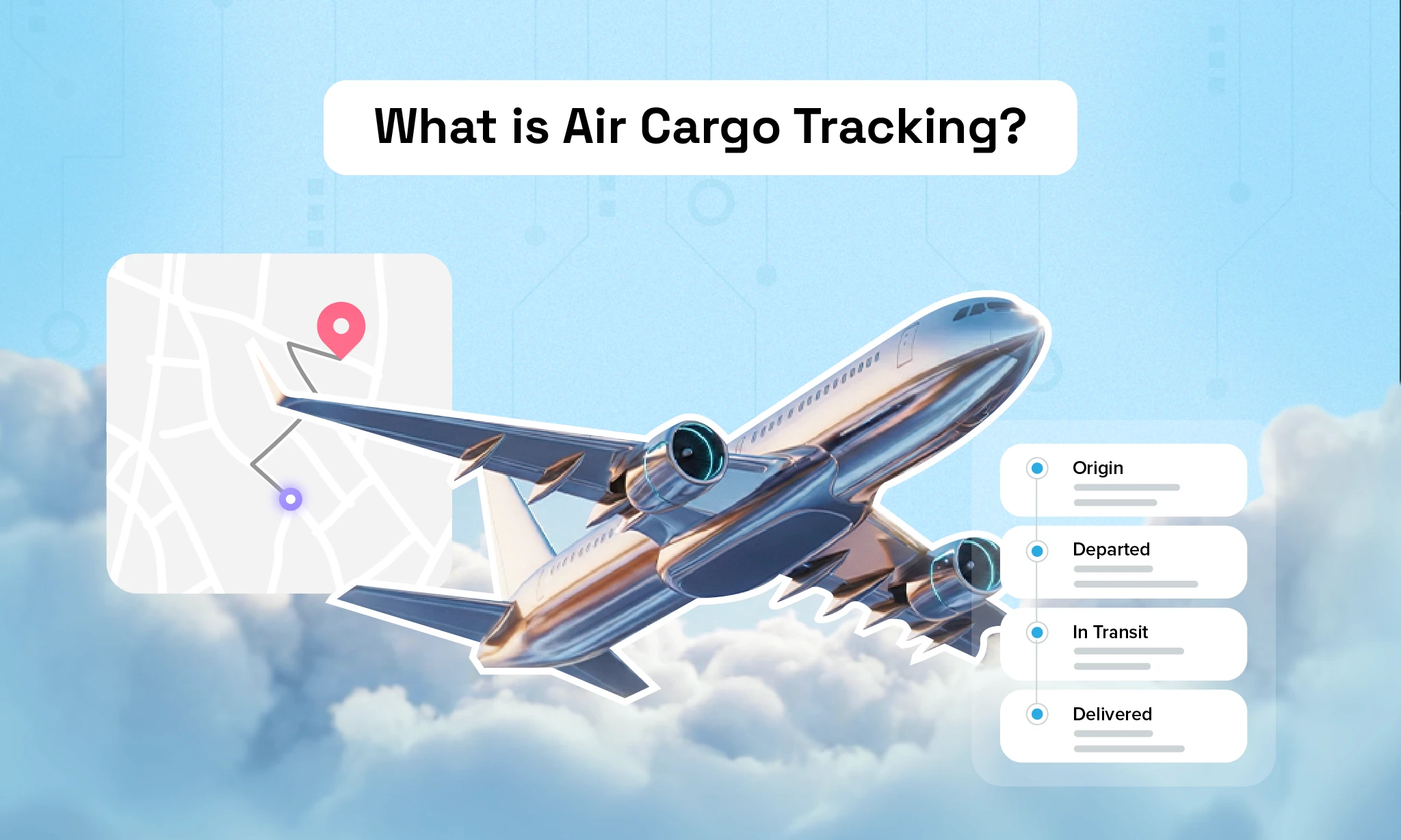
It provides real-time information on the shipment's location, status, estimated time of arrival, and any potential delays. This tracking system uses air waybill (AWB) number, and advanced technologies like IoT devices, GPS, and RFID tags to give shippers, freight forwarders, and other stakeholders greater transparency and control over their cargo during transit.
These technologies play a crucial role in air cargo tracking by continuously collecting and transmitting real-time data on shipment location and environmental conditions. As a result, stakeholders will be able to monitor cargo status with precision, receive timely updates on potential delays or changes in flight number, and make informed decisions to streamline operations.
Importance & Benefits of Air Cargo Tracking Software
Air cargo tracking software plays a crucial role in streamlining operations and enhancing supply chain visibility. The key benefits are listed below.
Real-time updates on shipment location help with proactive decision-making.
Improved customer satisfaction through shipment notifications and arrival updates.
Enhanced security by monitoring cargo movement and mitigating risks such as theft or damage.
Cost savings by optimizing delivery schedules and reducing operational costs.
Better inventory management by aligning shipments with demand and reducing delays.
Compliance with customs clearance and other regulatory requirements.
Why Do Organizations Choose Air Freight?
Air freight is one of the most expensive methods of transporting goods. Even with the higher cost, many organizations continue to use air cargo because the return on investment (ROI) is strong and the business benefits outweigh the expense.
Air freight provides unmatched speed, reliability, and predictable transit times. These factors are crucial for companies that manage time-sensitive shipments, customer commitments, or production schedules.
Businesses choose air freight for reasons such as:
Fastest Mode of Transport
Air freight significantly reduces transit time for long-distance shipments. What may take months by sea or rail can reach its destination within a few weeks by air.
Lower inventory carrying costs
Quick transit allows businesses to maintain smaller inventories and improve cash flow.
High Level of Security
Airports maintain tight security checks, advanced screening systems, and controlled handling environments. As a result of these safety protocols, it minimizes loss, theft, or damage.
Best Option for Time-Sensitive Shipments
Air Cargo is one of the best options for industries or organizations shipping perishables and time-sensitive goods.
Global Reach and Connectivity
Air networks connect most parts around the globe with major international hubs. Businesses can ship to new markets without waiting for ocean routes or dealing with multi-modal complexities.
Minimal Risk of Delays from External Factors
Unlike other modes such as sea or road transport, air cargo experiences fewer delays and bottlenecks. This makes it an ideal option for critical or time-sensitive shipments.
Ideal for Lightweight, High-Value Cargo
When goods are small, expensive, and time-critical, such as jewelry, medical devices, or automotive sensors. For these products, air freight is the most efficient and secure method.
How to Track Air Cargo?
Tracking air cargo typically involves using a unique tracking number or AWB number provided by air carriers. Businesses and customers can access tracking information through airline websites, dedicated tracking platforms, or logistics providers systems.
However, tracking air cargo requires switching between various apps and airline portals. Additionally, these portals or websites can limit visibility. An air cargo software like CargoEZ helps solve these problems. The software provides tools that help with the air freight and centralizes all the features required to simplify the process.
Direct access to AWB numbers from airlines
The system retrieves AWB data automatically, reducing manual entry.A dedicated Air Waybill Manager
Users can view, organize, and update all airway bills in one dashboard.A complete list of AWBs
Categorized by active, on-hold, completed, or pending shipments.E-AWB generation
Eawb software allows users to create electronic airway bills without switching between multiple systems.Real-time shipment visibility
Integrated feeds provide live updates on flight status, location, delays, and estimated arrival times.
What Information Can You Get by Tracking Air Cargo?
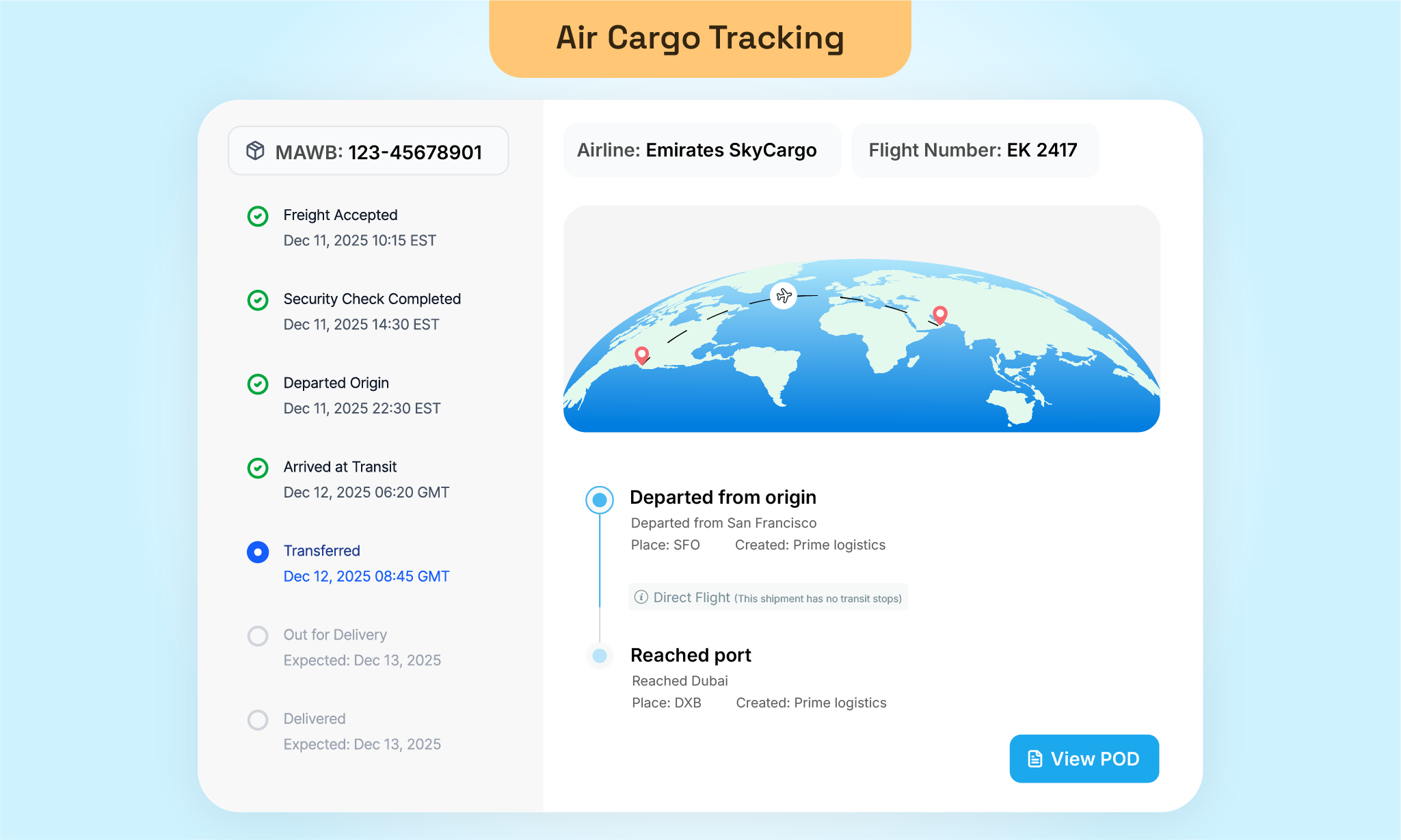
Air cargo tracking provides full visibility of a shipment from the moment it is handed over to the airline until final delivery. With the help of a tracking system or platform, businesses can access the following information:
Current location of the shipment
Real-time updates showing where the cargo is at any stage of transit.Flight details
Information such as the airline, flight number, departure airport, arrival airport, and transit points.Cargo movement milestones
Status updates including freight acceptance, security checks, departure, arrival, transfer, and delivery.Customs and security statuses
Alerts on customs clearance progress, security screening, or any compliance holds.
POD (Proof of Delivery)
Confirmation once the shipment has been delivered to the consignee.Master Air Waybill (MAWB) and House Air Waybill (HAWB) details
Complete visibility of both MAWB and HAWB helps businesses track consolidated shipments, understand which house shipments sit under a single master, and ensure all documents align with airline records.
Who Can Utilize Air Freight Tracking?
Air freight tracking is valuable for a wide range of stakeholders, including:
Shippers and freight forwarders managing shipments across multiple carriers.
Retailers and manufacturers monitoring inventory and delivery schedules.
Logistics companies optimizing supply chain operations.
Customs and regulatory agencies ensuring compliance.
Customers seeking transparency and timely updates on their orders.
Technologies Driving Air Cargo Tracking
Modern air cargo tracking technologies rely on a combination of digital and intelligent systems that bring real-time visibility, accuracy, and predictability to global logistics.
IoT Sensors & RFID Tags
IoT devices and RFID tags are essential for real-time cargo monitoring.
Exact shipment location
Temperature, humidity, and shock levels
Door opening or tampering
Conditions inside ULDs (Unit Load Devices) and containers
For sensitive cargo such as pharmaceuticals, perishables, and high-value goods, these sensors ensure the shipment remains within required parameters throughout transit.
GPS, Satellite & Cellular Tracking
GPS and satellite-enabled trackers allow continuous visibility even during flights or in remote regions.
Cellular connectivity ensures seamless updates during ground handling phases, such as:
At warehouse facilities
During last-mile delivery
At transit hubs
Cloud-Based Visibility Platforms
Cloud-based tracking platforms aggregate data from airlines, airports, forwarders, and sensor devices to offer:
A unified shipment dashboard
Real-time visibility for teams and customers
Historical data for performance insights
Automated alerts for delays or exceptions
This eliminates the need to switch between multiple airline portals and provides a single source of truth for all air cargo movements.
API Integrations with Airlines & Carriers
APIs allow systems to connect directly with airline databases, enabling instant retrieval of:
AWB updates
Flight status
ULD tracking
Customs events
This integration ensures tracking data is always fresh, accurate, and synchronized across all logistics partners.
Automation & Digital Documentation
Digital tools enable automated processes such as:
E-AWB generation
Automated milestone updates
Exception management workflows
Proof-of-delivery capture
Conclusion
Air cargo tracking is an essential tool for modern supply chain management, providing real-time visibility, enhanced security, and improved operational efficiency. As the air cargo industry continues to grow, adopting advanced tracking systems empowers businesses to mitigate risks, reduce costs, and deliver superior service to their customers.
Utilizing these advanced technologies elevates your logistics performance with on-time delivery, real-time visibility, and complete shipment transparency.
Frequently Asked Questions (FAQ)
What is the main purpose of air cargo tracking?
To provide real-time information on the shipment's location, status, and estimated arrival, improving transparency and control.
What technologies are used in air cargo tracking?
IoT, GPS, RFID, cloud computing, and AI-powered analytics are commonly used to enable real-time tracking and data insights.
Who benefits from air cargo tracking?
Shippers, freight forwarders, logistics providers, customs agencies, and customers all benefit from improved visibility and control.
How does air cargo tracking improve customer satisfaction?
By providing proactive shipment notifications, accurate delivery estimates, and transparency, reducing uncertainty and delays.
Does CargoEZ provide an air cargo tracking feature?
Yes, CargoEZ provides air cargo tracking technology.
Don't forget to share this blog!


