Managing Multi-Modal Shipments Without the Chaos
Author:
Dharshini Balamurugan
Published On:
Updated On:
1 min read
Multi-modal shipments have become a core part of global trade. Today’s supply chains rely on the seamless movement of cargo through multiple transport modes to save time, reduce costs, and increase flexibility. But handling a multi-modal shipment efficiently is easier said than done. Each mode runs on its own timelines, paperwork, and operational rules. One delay, one missing document, or one miscommunication can set off a chain of disruptions across the entire route.
This blog breaks down the smartest ways to manage multi-modal shipments end-to-end, covering planning, documentation, handoffs, risk mitigation, technology, and more.
The goal is simple: to help you run smoother, faster, more predictable logistics operations.
What Are Multi-Modal Shipments?
Multi-modal shipments combine two or more transportation modes under a single contract or bill of lading. This means the entire door-to-door movement is overseen by one responsible carrier or forwarder, even though the cargo moves across different networks. It simplifies accountability and often speeds up transit.
It’s especially useful for international shipments where a single mode cannot cover the full route. By blending modes, businesses can optimize time, cost, and route efficiency without juggling multiple contracts or carriers.
Intermodal shipping, by contrast, uses multiple modes as well but keeps separate contracts for each leg of the journey.
Why Multi-Modal Shipping Matters Today
Multi-modal transport gives companies the flexibility to move cargo where single-mode shipping falls short. You can create routes that bypass bottlenecks, reduce transit time, or lower your total landed cost. Because there are fewer handling points, there’s also a lower risk of damage or misrouting.
As global trade becomes more complex, multi-modal shipping helps businesses reach new markets efficiently. It also supports sustainability goals by allowing companies to choose greener mode combinations—like rail + sea, without sacrificing reliability.
Challenges in Managing Multi-Modal Shipments
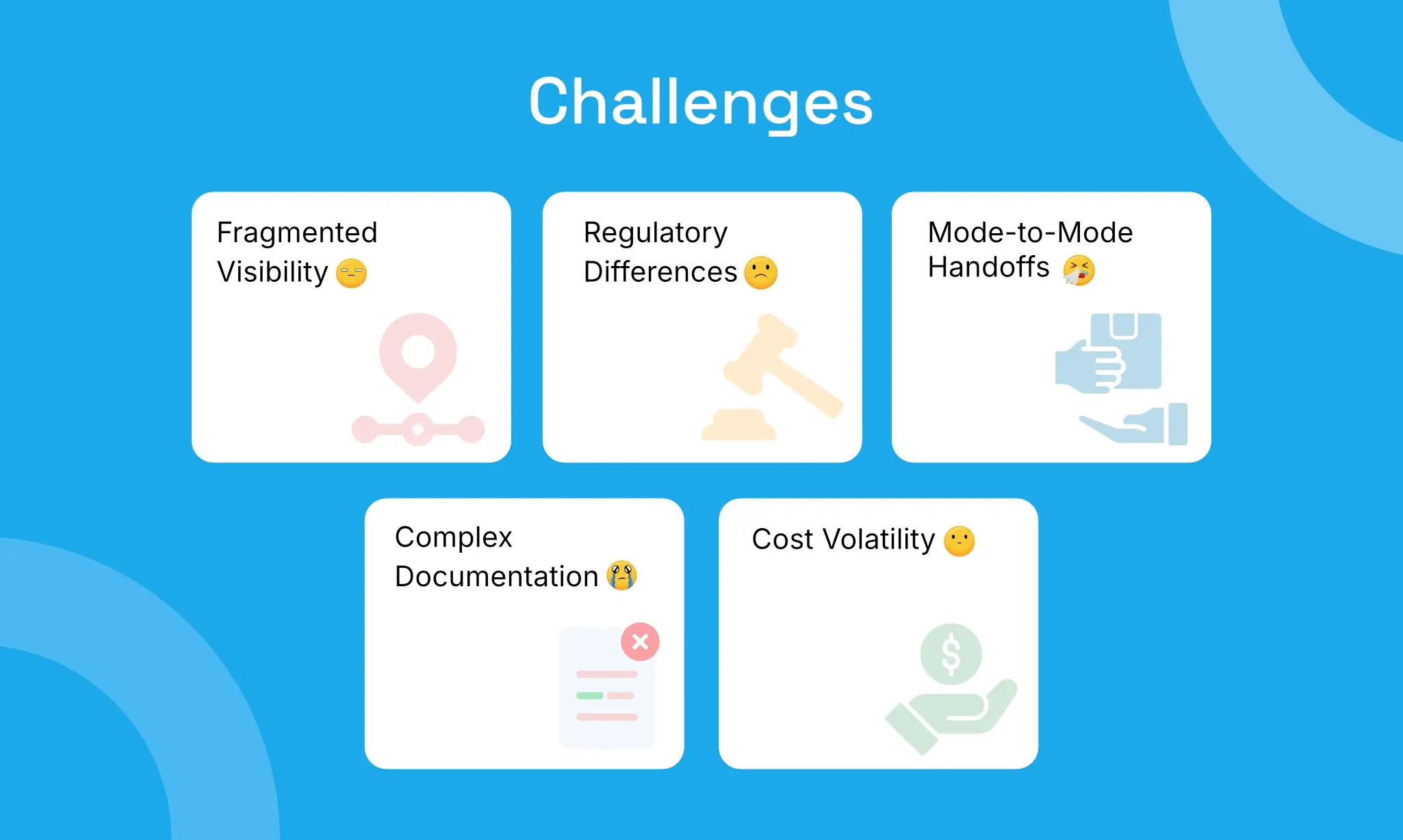
Multi-modal shipments are powerful, but operationally challenging. Each mode introduces its own dependencies, and making them work in sync requires tight coordination and great visibility.
1. Fragmented Visibility
Because each mode and carrier often uses different tracking systems, you end up piecing together updates from multiple portals or emails. This makes it hard to predict delays or spot exceptions in time. Without unified visibility, your team is reactive instead of proactive.
2. Complex Documentation
Every leg of a multi-modal shipment requires accurate and timely paperwork. A missing bill of lading, certificate, or customs document can halt the entire cargo. Since all modes share one contract, even a small documentation error can cause cascading delays.
3. Mode-to-Mode Handoffs
Handoffs are the riskiest points. Cut-off times, seal checks, container conditions, and cargo accuracy all need to be verified. A small oversight, like a mismatched seal number or late truck arrival, can lead to missed sailings or flights.
4. Regulatory Differences
Multi-modal shipments move across different territories, each with its own compliance rules. Whether it’s dangerous goods regulations, HS codes, duties, or port restrictions, staying compliant across every leg can be overwhelming.
5. Cost Volatility
Fuel prices, capacity constraints, port congestion surcharges, and last-mile variability can fluctuate. Without careful planning and analysis, costs can quickly balloon beyond expectation.
How to Handle Multi-Modal Shipments Efficiently
Below is a detailed breakdown of the most effective ways to manage multi-modal shipments with clarity and control.
1. Strengthen Your Planning & Pre-Shipment Strategy
Planning is the backbone of multi-modal success. The better your route and timeline planning, the smoother the rest of your operations will be.
Build a Mode Mix That Matches Your Cargo
Different cargo types demand different mode strategies. High-value or time-sensitive goods may need air + road combinations, while heavy or non-urgent shipments may benefit from rail + sea. Choosing the right blend helps optimize both costs and transit time. When planned properly, mode-mixing becomes a tool for efficiency rather than complication.
Assess Route Feasibility Early
Every route has its quirks, seasonal congestion, weather disruptions, and political or customs slowdowns. By evaluating these factors early, you can choose the most reliable ports, depots, and corridors. This reduces the chance of mid-transit surprises and gives customers more accurate ETAs.
Align With Your Carrier Network
Early coordination with carriers ensures you have clarity on cut-off times, capacity, transit windows, and expected delays. This also helps you lock down better rates and predictable schedules. Smooth carrier alignment leads directly to smoother multi-modal transitions.
2. Optimize Documentation & Compliance
Documentation is one of the biggest risk areas in multi-modal shipping, so tightening this process is essential.
Standardize Your Documentation Process
Using consistent templates and checklists helps reduce errors. When teams know exactly which documents to prepare for each leg, they work faster and make fewer mistakes. Standardization also makes audits and compliance checks easier.
Digitize and Automate Wherever Possible
Digital documentation reduces manual work and speeds up verification at ports, depots, and customs. Sharing docs with partners becomes effortless, and teams spend less time hunting through email threads. Automation also catches errors that would otherwise slip into final forms.
Stay Updated on International Regulations
Regulatory compliance changes constantly, HS codes, DG rules, tax slabs, customs policies. Keeping your team and system updated avoids costly holds and penalties. Even small updates can significantly impact transit time or cost.
3. Improve Real-Time Visibility & Tracking
Visibility is the heart of efficient multi-modal movement. When you can track all modes in one place, you gain control over your operations.
Use Integrated Tracking Instead of Multiple Portals
Jumping between carrier portals and manual updates leads to confusion. A unified view of truck, vessel, rail, and air progress lets teams respond to issues immediately. It also builds confidence with customers who appreciate transparent updates.
Leverage Predictive ETAs
Modern tracking tools can analyze traffic, port dwell time, weather, and carrier performance to forecast ETAs. This helps you manage downstream operations like trucking slots or warehouse labor, more accurately. Predictive ETAs transform your workflow from reactive to proactive.
Set Alerts for Exceptions and Delays
Automated alerts ensure that your team knows exactly when something goes wrong. Instead of discovering a delay hours later, you can re-route, adjust plans, or notify customers immediately. This simple shift drastically improves customer satisfaction.
4. Enhance Communication Across Stakeholders
Multi-modal shipping involves many players. When communication is scattered, delays and misunderstandings multiply.
Centralize All Shipment Communication
Rather than chasing updates through emails, WhatsApp groups, and calls, centralize everything in one place. A shared channel keeps everyone aligned and reduces duplicate work. This also creates a clear audit trail.
Share Real-Time Updates Proactively
Proactive communication prevents escalations. When partners receive updates as soon as something changes, they have time to adjust. It builds trust and helps maintain service consistency even when disruptions occur.
Create Standard Operating Procedures (SOPs)
A well-defined SOP ensures that all partners follow the same processes for documentation, handoffs, and reporting. SOPs reduce ambiguity and ensure smoother transitions between modes. It also helps onboard new partners faster.
5. Minimize Mode-to-Mode Handoff Issues
Most errors in multi-modal shipping occur during the transitions so tightening this stage makes a huge impact.
Use Digital Handoff Checklists
Digital checklists ensure that teams verify container numbers, seal integrity, cargo condition, and documentation before each handoff. This reduces the chance of mismatched data or damaged cargo. It also speeds up verification because details are logged instantly.
Automate Gate-In/Gate-Out Processes
Automated timestamps and digital PODs remove manual dependencies. This ensures accuracy while cutting down wait times at depots and ports. Faster gate movements translate into better resource planning downstream.
Clarify Timelines and Cut-Offs Clearly
Every mode has strict cut-offs, and missing just one can lead to days of delay. Clear communication of cut-offs helps truckers, warehouses, and carriers all stay aligned. When everyone knows the timing, handoffs become smoother and quieter.
6. Strengthen Risk Management & Contingency Planning
Multi-modal shipments face more variables, so risk mitigation becomes essential.
Add Smart Buffers in the Right Places
Instead of padding the entire timeline, add small buffers at high-risk points like transshipments or congested ports. This minimizes delay impact without inflating total transit time. Smart buffers keep your ETA promises realistic.
Prepare Alternative Routes and Partners
Backup routes give you flexibility when disruptions occur. Having alternate ports, depots, or trucking partners ensures continuity. These backups can be lifesavers during peak seasons or strikes.
Track Patterns to Predict Risks
Historical data reveals recurring issues like seasonal congestion, weather delays, or specific carrier performance. Understanding these patterns helps teams plan smarter and avoid pitfalls. Data-driven decisions always outperform guesswork.
7. Prioritize Cost Optimization Without Compromising Quality
Cost control is crucial in multi-modal shipping, but cutting costs shouldn’t disrupt operations.
Blend Modes Strategically
Combining modes like rail + sea or truck + rail can significantly reduce freight charges. It maintains reliability while cutting fuel and handling costs. With the right mix, businesses achieve a strong balance between speed and cost.
Avoid Demurrage and Detention Through Alerts
Many companies lose money simply due to late pick-ups or missed free days. Automated reminders ensure your team collects containers and clears cargo before charges kick in. These savings add up quickly.
Improve Packaging and Handling
Good packaging protects cargo across multiple handling points. It reduces damage claims and speeds up customs checks. Investing in packaging is cheaper than dealing with loss or rejections.
Use Volume Forecasting for Better Rates
Accurate forecasting helps you negotiate better contracts with carriers. It also guarantees space during peak seasons. Ultimately, forecasting brings predictability to your supply chain costs.
8. Use the Right Technology for Multi-Modal Logistics
Technology makes multi-modal management dramatically easier. With the right platform, teams eliminate manual work, gain visibility, and collaborate effortlessly.
Centralized, Unified Tracking
A system that tracks vessel, truck, rail, and air in one place gives your team unmatched control. It prevents confusion and speeds up decision-making. Customers appreciate a clean, accurate timeline of their shipments.
Automated Documentation Workflows
Software that auto-generates bills, invoices, labels, and customs forms removes a huge amount of manual effort. It also reduces errors that could lead to holds. Automated documentation is essential for increasing efficiency.
Real-Time Alerts and Communication Tools
Instant alerts ensure that disruptions don’t catch your team off-guard. Integrated communication helps carriers, shippers, and teams stay synced. It makes multi-modal coordination significantly smoother.
Financial Automation
From quotations to invoices and cost comparisons, financial automation ensures transparency and reduces disputes. It also helps track profitability per shipment or lane. This clarity supports better decision-making.
9. Train Your Team in Multi-Modal Best Practices
Well-trained teams create smooth operations. Without proper knowledge, even the best tools can’t fix workflow gaps.
Offer Mode-Specific Training
Each transport mode has its own requirements and risks. Training helps teams understand the nuances and handle cargo more confidently. It also reduces mistakes across documentation and handoffs.
Run Simulations for High-Risk Scenarios
Simulations prepare teams to react quickly during disruptions. Whether it’s a port delay or customs hold, practice builds resilience. Teams respond faster and with more clarity under real pressure.
Encourage Collaboration Between Teams
Cross-functional collaboration ensures that sales, operations, finance, and customer support stay aligned. When everyone understands the workflow, customer updates and decision-making become smoother. It creates a far more cohesive logistics operation.
How Modern Platforms Streamline Multi-Modal Operations
Efficient multi-modal management requires strong planning supported by reliable technology. Teams need real-time tracking software, organized documentation, and smooth coordination across every handoff to keep shipments moving without disruption.
With unified tracking across truck, air, ocean, and rail, logistics teams can stay fully aware of cargo movements. Automated documentation reduces manual work and minimizes errors, while real-time alerts help teams identify delays early and respond before issues escalate. Integrated communication and finance workflows create a single, organized space for shipment details, updates, and records.
Using CargoEZ helps teams streamline operations, cut down repetitive tasks, and maintain clear visibility across every mode—making multi-modal shipping more manageable and efficient.
Conclusion
Efficient multi-modal shipping is no longer optional, it’s a competitive advantage. When you strengthen planning, streamline documentation, improve visibility, align communication, and invest in the right tools, your logistics operation becomes faster, more resilient, and more cost-efficient.
With platforms like CargoEZ, companies gain the visibility, automation, and structure needed to manage complex multi-modal operations effortlessly.
The result?
Smarter workflows, better customer satisfaction, and a supply chain that’s truly ready for the demands of modern global trade.
Frequently Asked Questions (FAQs)
1. How do companies manage multi-modal logistics efficiently?
Companies manage multi-modal logistics by using centralized planning, real-time tracking, automated documentation, and strong communication across carriers and partners. Modern platforms help unify all modes—air, ocean, rail, and road into a single workflow.
2. What is the main challenge in multi-modal transportation?
The biggest challenge is coordinating multiple modes without losing visibility. Delays, handoff errors, missing documents, and inconsistent tracking make multi-modal shipments harder to manage compared to single-mode transport.
3. What documents are required for multi-modal shipments?
Common documents include the multi-modal bill of lading (MBL), commercial invoice, packing list, certificate of origin, customs forms, and any mode-specific documents like AWBs or CBLs. Requirements vary by country and cargo type.
4. How can businesses reduce delays in multi-modal shipping?
Businesses can reduce delays by digitizing documentation, using predictive ETAs, setting automated alerts for exceptions, training teams on handoff processes, and planning routes with backup options for congestion or disruptions.
5. Is multi-modal shipping more cost-effective than single-mode transport?
Often, yes. Combining modes—like rail + sea or road + air—can lower overall transport costs, reduce handling fees, and avoid congestion-prone routes. The best mix depends on cargo type, urgency, and route availability.
6. What kind of technology helps improve multi-modal logistics?
Technology such as unified tracking systems, automated documentation tools, real-time alerting, and financial automation helps improve visibility, reduce manual work, and streamline coordination across all transport modes.
Don't forget to share this blog!


