5 Signs It’s Time to Find Advanced Freight Forwarding Software
Author:
Pamela
Published On:
1 min read
Freight forwarding today is no longer just about moving cargo from point A to point B. It’s about visibility, speed, accuracy, and control, in real time. If your operations still rely on disconnected systems, manual updates, delayed tracking information, or reactive problem-solving, you’re not just slowing down operations, you’re losing trust and margin.
Advanced freight forwarding software exists to eliminate blind spots, reduce manual effort, and give forwarders a single source of truth across shipments, milestones, and stakeholders. If delays catch you by surprise, customers constantly ask for updates, or your team spends more time chasing information than acting on it, these are not minor inefficiencies — they’re clear signals that your current setup has outgrown its usefulness.
Here are five unmistakable signs it’s time to upgrade to advanced freight forwarding software, before inefficiencies turn into lost business.
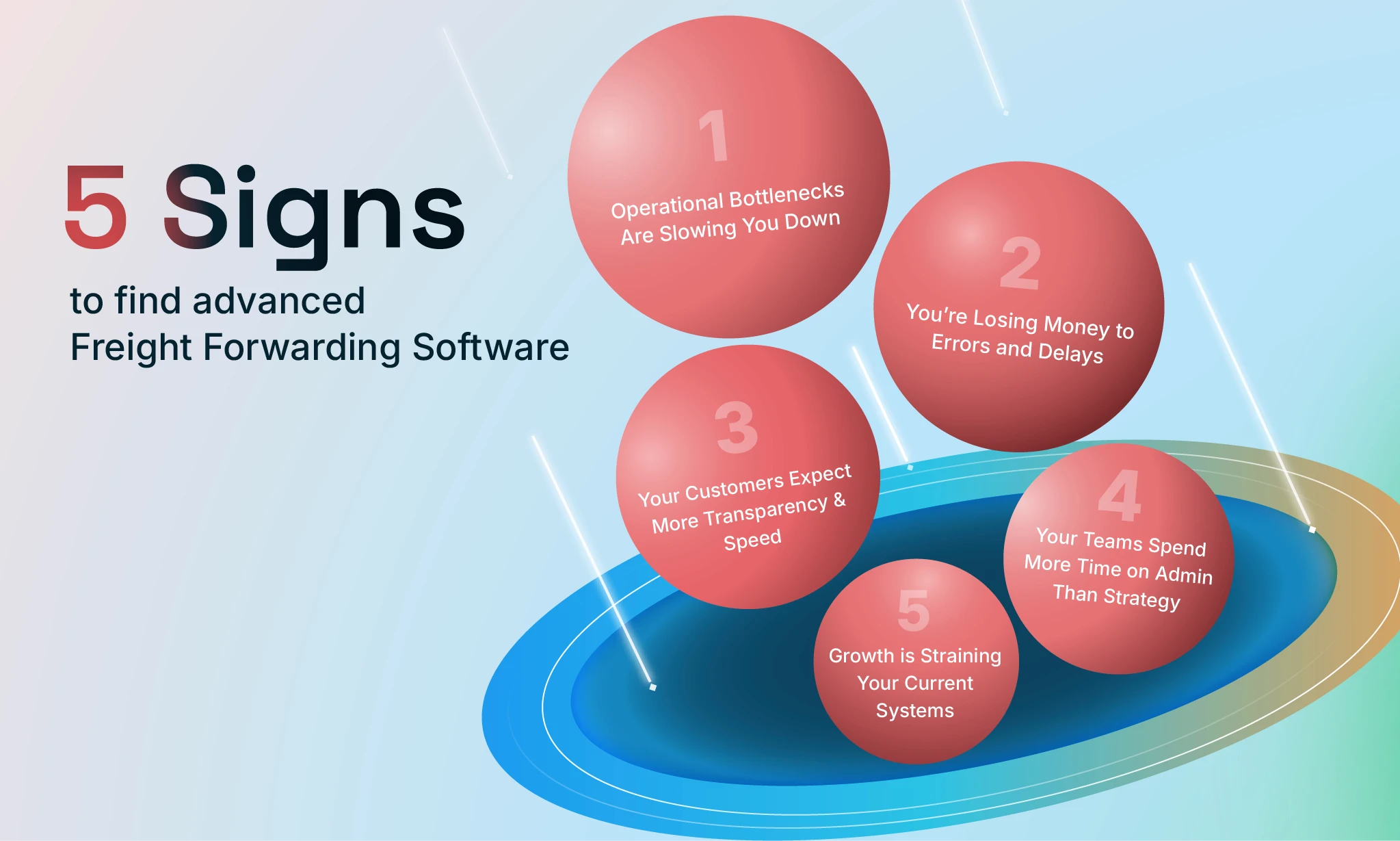
Sign 1: Operational Bottlenecks Are Slowing You Down
The Hidden Cost of Manual Work
In the early days of a freight operation, manual processes often feel “good enough.” A few spreadsheets, emails, and phone calls seem manageable and everything appears under control. But as shipment volumes grow, clients increase, and operations become more complex, these same processes start to break down.
Manual data entry inevitably leads to errors. Documents get duplicated, misplaced, or lost, and teams spend more time chasing updates than actually managing shipments. What once took a day can now take a week, not because your team is inefficient, but because your systems have not scaled alongside your business. When your team hits this ceiling, the need for dedicated freight forwarding software becomes a matter of survival rather than just a technical upgrade. Over time, these inefficiencies build up, creating stress for staff, frustration for clients, and delays that affect the entire supply chain.
Real Bottlenecks Include
Spreadsheet sprawl: Shipment data lives in multiple files and versions, creating inconsistencies with every update.
Email overload: Status updates and approvals buried in long threads are difficult to track or audit.
Disconnected tools: Booking, costing, documentation, and tracking sit in silos, forcing repeated manual entry.
Limited visibility: Without a unified view, exceptions and shipment delays go unnoticed until they become urgent issues.
Coordination gaps: Teams waste hours chasing approvals or clarifying conflicting information across departments.
How Software Helps
Modern freight software centralizes operations, automates data capture, and creates a single source of truth. Exception alerts notify teams of issues early, dashboards provide both internal and customer visibility, and redundant work is minimized. By implementing these tools, agencies can effectively streamline freight forwarding process workflows that previously relied on fragmented communication.
Automation reduces errors, speeds up approvals, and ensures data consistency across the business. Hours of admin work turn into minutes, operational decisions happen faster, and businesses gain the agility and confidence needed to scale efficiently without overburdening staff. Software also helps teams spot bottlenecks before they become problems and supports better collaboration between departments and partners.
Sign 2: Errors and Delays Are Costing You
Freight forwarding is a fast-moving, detail-driven business. Even small mistakes can quickly escalate into major operational and financial headaches.
Errors Are Expensive
In freight operations, accuracy is critical at every stage, from customs documentation and carrier bookings to invoicing and final delivery. Minor mistakes such as typos, incorrect tariff codes, misentered weights, or wrong invoice figures can trigger customs holds, fines, or insurance claims. These errors not only disrupt schedules but also increase stress for teams and risk damaging relationships with clients and partners.
Delays Multiply Costs
Delays caused by errors are more than just inconvenient—they are expensive. Late pickups may lead to demurrage or storage fees. Missed delivery deadlines can result in penalties or lost business. Correcting mistakes manually consumes hours of labor that could have been invested in growth initiatives, customer service, or strategic planning. Over time, these delays erode productivity, reduce client satisfaction, and create long-term revenue risks.
Software Reduces Risk
Modern freight software mitigates these challenges by automating routine processes, validating compliance in real time, and verifying data at multiple checkpoints. Intelligent forms and auto-complete features minimize human error during data entry. Exception alerts highlight discrepancies or missing information before shipments are finalized. Integrated carrier templates standardize document formats and submission procedures, ensuring consistency across operations. The result is not only fewer errors but faster issue resolution, smoother workflows, and improved operational confidence for both teams and clients.
Sign 3: Customers Expect Transparency and Speed
In logistics today, customers expect to be in the loop every step of the way.
Rising Expectations
Today’s customers want more than cargo delivered safely—they demand visibility, speed, and control. Real-time tracking, automated alerts, easy access to invoices and documents, and prompt responses to inquiries have become standard expectations. They expect to know exactly where their shipment is at any moment and be informed immediately if something changes.
Poor Visibility Costs
Without clear visibility, teams face high volumes of customer calls, support costs rise, and clients lose confidence in your operations. Delays in communication or incomplete information can frustrate clients, reduce repeat business, and erode long-term partnerships. Even small gaps in transparency can create a perception of unreliability and risk revenue over time.
Software Delivers
Modern freight systems address these challenges by providing customer portals, automated notifications, interactive dashboards, and API integrations with ERP or TMS systems. Clients gain real-time insights into shipments, invoices, and documents. Proactive alerts and self-service tools empower customers while reducing inquiries and administrative burden. This level of transparency strengthens trust, improves client satisfaction, and allows your teams to focus on higher-value tasks instead of fielding constant status calls.
Sign 4: Your Teams Are Stuck in Admin Work
In freight forwarding, your team’s expertise drives growth, but manual work often keeps them from delivering their full potential.
Your People Are Your Biggest Asset
Freight teams are skilled problem-solvers, negotiators, and planners. Yet up to 70% of their time may go to repetitive administrative work: re-keying data, reconciling documents, updating multiple systems, and responding to emails. Valuable insights and strategic thinking get buried under operational noise.
The Admin Trap
Manual workflows prevent teams from focusing on strategy, exception management, and high-value decisions. Productivity suffers, morale declines, and customer satisfaction can slip. Staff may feel frustrated, and top performers may spend more time fighting inefficiencies than growing accounts or improving operations.
Software Frees Teams
Modern freight platforms integrate workflows, automate approvals, and provide role-specific dashboards. Teams can focus on optimizing routes, negotiating rates, handling exceptions efficiently, and building stronger client relationships. Automation reduces repetitive tasks while maintaining operational control. Real-time visibility and centralized data ensure that every team member can make informed decisions quickly, turning administrative hours into strategic impact and empowering the business to scale confidently.
Sign 5: Growth Is Straining Your Systems
As your freight operations grow, what once worked can suddenly feel like it is holding you back. Rapid expansion exposes weaknesses in manual processes and legacy systems, turning growth into a source of operational stress.
Growth Reveals Weaknesses
When volumes increase, disconnected tools and outdated workflows quickly reach their limits. Hiring more staff or juggling multiple spreadsheets and siloed platforms is not a sustainable solution. Errors multiply, visibility suffers, and teams spend more time firefighting than focusing on growth. Without proper systems, expansion can slow down the business instead of accelerating it.
Scaling Needs Standardization
Efficient scaling relies on repeatable, standardized processes. Each new shipment or account should follow automated workflows to reduce errors and streamline operations. When looking for ways to Scale Freight Forwarding Business operations, many leaders realize that legacy systems lack real-time updates, API integrations, or multi-region support. This forces teams to manually reconcile data, manage exceptions, and troubleshoot issues, which creates bottlenecks and increases operational risk.
Modern Platforms Support Growth
Integrated, automated freight software centralizes data, standardizes processes, and provides real-time visibility across operations. Teams can handle higher volumes with confidence, maintain accuracy, and ensure timely deliveries. Advanced systems also support exception management, compliance, and reporting, reducing manual effort and empowering staff to focus on strategic initiatives. By transforming operational chaos into structured, predictable, and scalable workflows, modern platforms allow freight forwarders to grow without limits while maintaining efficiency, reliability, and customer satisfaction.
Choosing the Right Software
If you’ve spotted any of the 5 signs above, it’s time to think about upgrading to an advanced freight forwarding platform. But not all software is created equal.
Here’s how to evaluate your next system:
1. Unified Platform, Not Patchwork Tools
Many forwarders try to glue tools together:
A TMS here
A docs tool there
A tracking portal from someone else
Custom spreadsheets
This fractured approach leads to:
Data silos
Manual re-entry
Visibility gaps
Version control issues
Instead, choose a unified system that consolidates:
Bookings
Documentation
Compliance
Accounting
Visibility
Reporting
A single source of truth reduces risk, effort, and friction.
2. Real-Time Visibility and Alerts
The ability to know what’s happening — and react — is no longer a luxury:
Track shipments in real time
Get alerts for exceptions (delays, docs, compliance issues)
Provide customers with live updates
These capabilities improve trust and reduce service costs.
3. Scalability and Extensibility
Your software should grow with you:
Multi-office support
Multi-currency and regions
Role permissions
API integrations with carriers, customs, clients
Scalability isn’t just about capacity — it’s about flexibility.
4. Automation of Repetitive Tasks
Look for:
Auto-population of forms
Rule-based workflows
Templates for recurring tasks
Triggered notifications
Automated billing and costing
Automation reduces errors and saves hours of manual labor.
5. Compliance and Document Accuracy
Regulatory complexity is increasing:
Customs requirements evolve
Trade regulations change
Carrier rules differ by region
Your system must support compliance with built-in templates, validations, and checks — not leave this to manual effort.
6. Analytics and Strategic Insights
Basic reporting is table stakes. Modern forwarders need:
Dashboards for performance
Margin and revenue analytics
Exception trends
Cost drivers and KPIs
Insights should inform strategy — not be an afterthought.
Legacy Systems Aren’t Just Inefficient — They Are a Competitive Threat
Legacy software or a patchwork of isolated tools creates:
Data silos
Redundant work
Poor visibility
Manual reconciliation
Lack of real-time insights
Difficult onboarding for new clients
The longer you rely on them, the wider the gap between you and modern players.
In the digital era, freight forwarders must treat technology not as a back-office tool, but as a strategic enabler.
What Modern Software Should Deliver
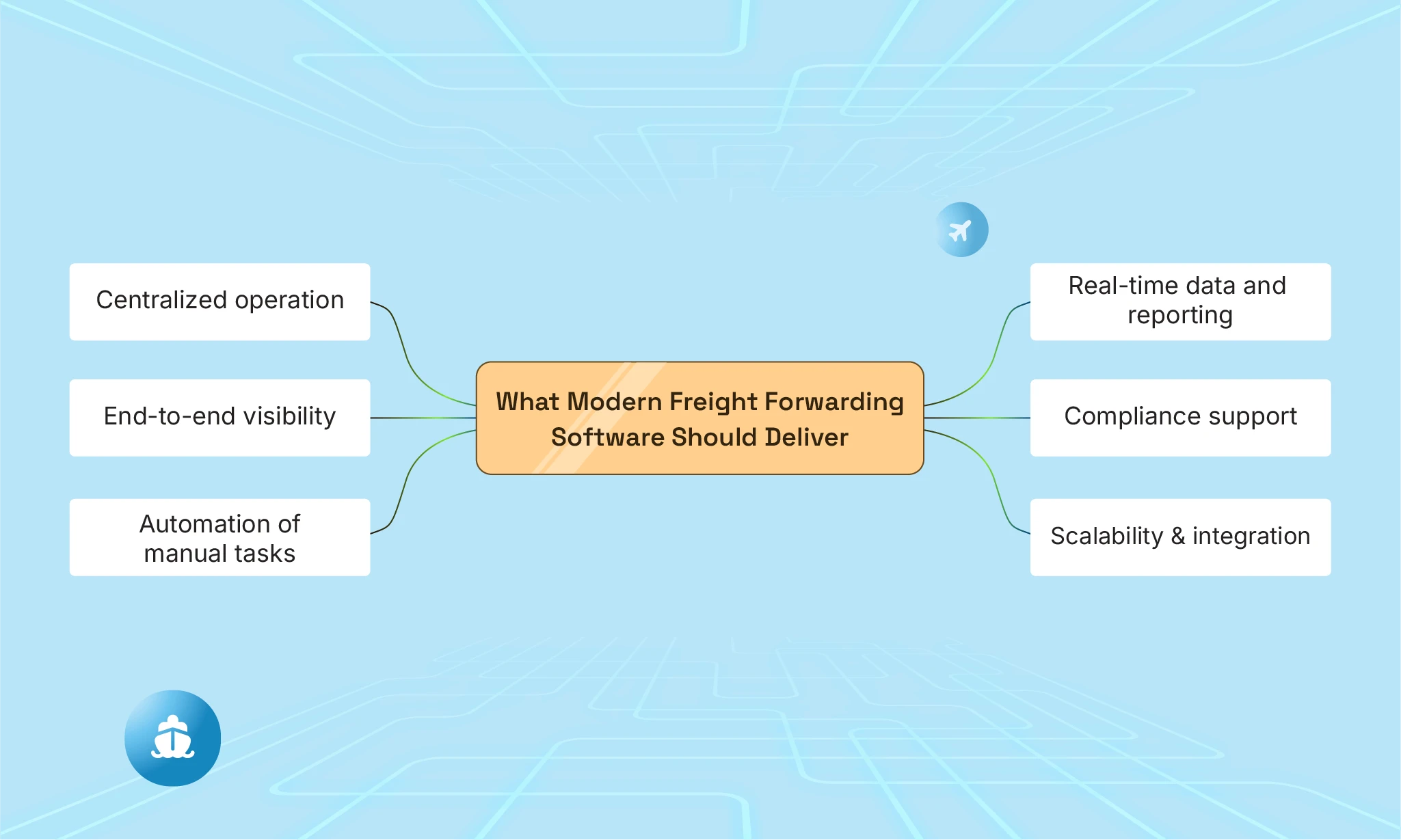
When enterprises evaluate freight forwarding platforms, they look for:
Centralized operations
End-to-end visibility
Automation of manual tasks
Compliance support
Real-time data and reporting
Scalability and integration
A platform like CargoEZ delivers these capabilities in a unified solution designed for modern freight operations.
With CargoEZ, forwarders can:
Manage bookings, documentation, and compliance in one place
Provide real-time tracking and visibility to customers
Streamline costing and billing
Automate workflows and reduce errors
Scale seamlessly as business needs grow
CargoEZ isn’t just a software, it’s a foundation for operational excellence.
Conclusion
Modern freight forwarding is not just about moving cargo, it’s about managing complex operations with precision, speed, and transparency. When your people spend more time on manual tasks, errors are common, visibility is poor, and growth creates strain — it’s a sign that traditional methods are no longer enough.
Investing in advanced freight forwarding software is no longer optional, it’s essential. The right platform boosts efficiency, improves customer experience, enables compliance, and empowers your team to focus on strategy instead of administration.
A unified, modern system like CargoEZ helps forwarders stay competitive, scalable, and agile. In a world where digital transformation defines winners and losers, the time to act is now.
Frequently Asked Questions (FAQs)
1. What Is Advanced Freight Forwarding Software?
Advanced freight forwarding software is a unified platform that centralizes bookings, documentation, compliance, tracking, accounting, and reporting. It replaces spreadsheets and disconnected tools with automated workflows, real-time visibility, and standardized processes across operations.
2. How Do I Know If My Freight Forwarding Business Has Outgrown Its Current System?
If your team relies heavily on spreadsheets, faces frequent documentation errors, struggles with shipment visibility, or spends hours on manual updates, your current setup is likely limiting growth. Increasing shipment volume and customer expectations usually expose these gaps.
3. What Are the Risks of Using Manual Processes in Freight Forwarding?
Manual processes increase the chances of customs errors, delayed shipments, billing discrepancies, compliance issues, and missed milestones. Over time, these mistakes impact margins, customer trust, and operational efficiency.
Author

Don't forget to share this blog!