Last Mile Delivery Optimization: Best Practices
Author:
Divya Murugan
Published On:
1 min read
If you are a freight forwarder, you already know how unpredictable the last mile can be. A container may clear customs on time, but the final delivery can still slow down because the driver is stuck in congestion, the consignee is unavailable or the address details are incomplete. Industry reports show that the last mile can consume up to 40 % of total logistics costs, even though it is the shortest physical segment of the journey.
This gap between distance and cost is exactly why last-mile delivery becomes the most sensitive and difficult part of the supply chain for forwarders. With better data, smarter routing, and tighter visibility, this stage can transform from your biggest risk into your strongest competitive advantage.
The good news is that last-mile delivery is also the part you can improve the fastest. With the right strategies, you can reduce costs, improve customer satisfaction, and build delivery operations that stay reliable even on your busiest days.
This guide breaks everything down in simple, practical steps.
What is Last Mile Delivery Optimization
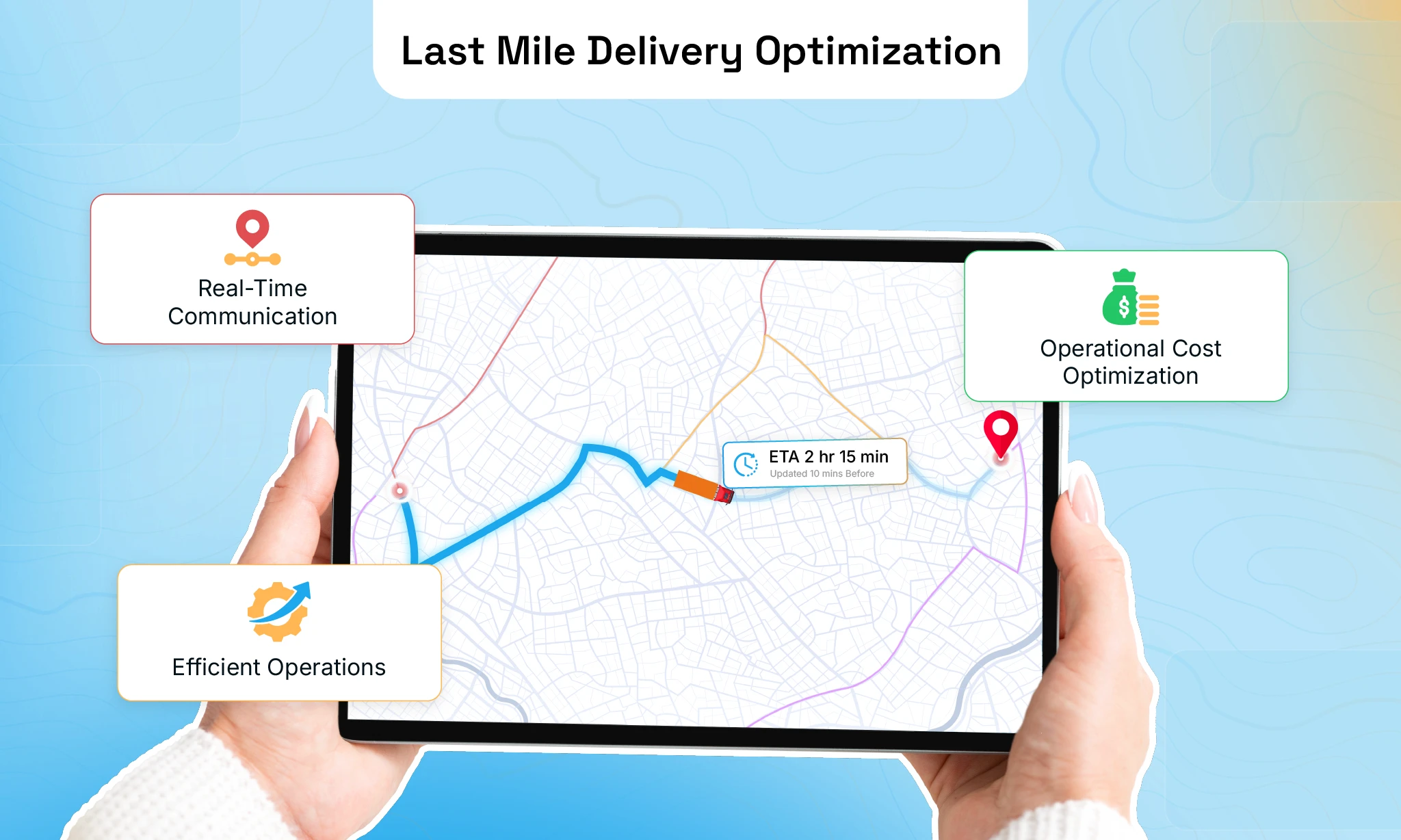
Last-mile delivery optimization is the process of improving every step involved in getting a shipment from the final hub to the consignee. It covers how drivers are assigned, how routes are planned, how ETAs are calculated, and how delivery exceptions are managed. Instead of simply moving a package from point A to point B, optimization ensures the delivery happens in the fastest, most efficient, and most cost-effective way possible while keeping the customer informed at every stage.
The goal is simple:
Deliver faster, smarter, and at a lower cost without compromising customer experience.
It involves:
Better route planning
More accurate ETAs
Improved communication
Efficient resource allocation
Tools that reduce failed deliveries
This is the stage where businesses often face traffic delays, unpredictable customer availability, staff shortages, and rising operational costs. Last-mile optimization helps companies handle these challenges with precision instead of guesswork.
Why Last Mile Delivery Is So Challenging
1. High costs
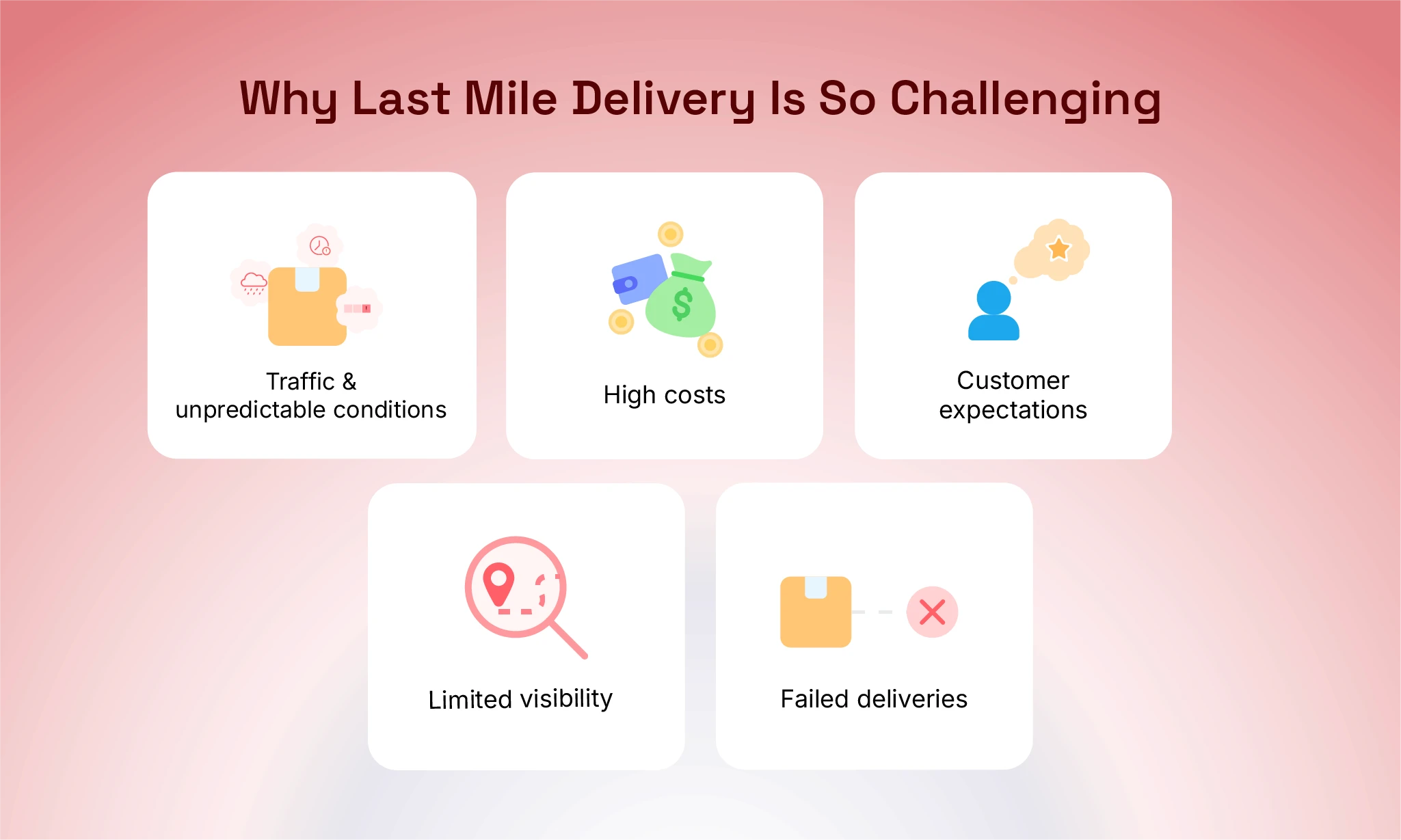
Studies show that last-mile delivery can take up almost half of total logistics costs. Fuel, labor, returns, and redeliveries all add up very quickly.
2. Customer expectations
People expect faster, cheaper, and more flexible delivery options. Many are willing to switch to another retailer if delivery is unreliable.
3. Traffic and unpredictable conditions
Urban areas face congestion. Rural areas face long distances. Weather, roadblocks, and peak-hour patterns make routes unpredictable.
4. Failed deliveries
Customers may not be home. Addresses may be incorrect. Packages may need signatures. Every failed delivery increases cost and delays.
5. Limited visibility
Operations teams struggle when they cannot see where drivers are, what is delayed, or which customer needs an update.
This combination makes last-mile delivery one of the most complex parts of logistics, but also the most rewarding to optimize.
The Importance of Optimizing Last Mile Delivery
When last-mile delivery works smoothly, everything else follows. Optimizing this stage delivers real benefits:
Reduced costs
Efficient routing reduces mileage, fuel usage, and driver hours. Even small improvements multiply across hundreds of deliveries.
Higher customer satisfaction
Customers get more accurate ETAs and real-time tracking. Reduced delays lead to happier buyers and higher repeat purchases.
Improved operational efficiency
Teams spend less time firefighting and more time improving. Workflows become predictable. Drivers are more productive.
Stronger brand loyalty
Last-mile delivery is often the only physical touchpoint between a brand and a customer. A great final delivery creates trust.
More sustainable operations
Better routes mean fewer miles, lower emissions, and reduced wasted trips.
The 10 Best Practices to Optimize Last Mile Delivery
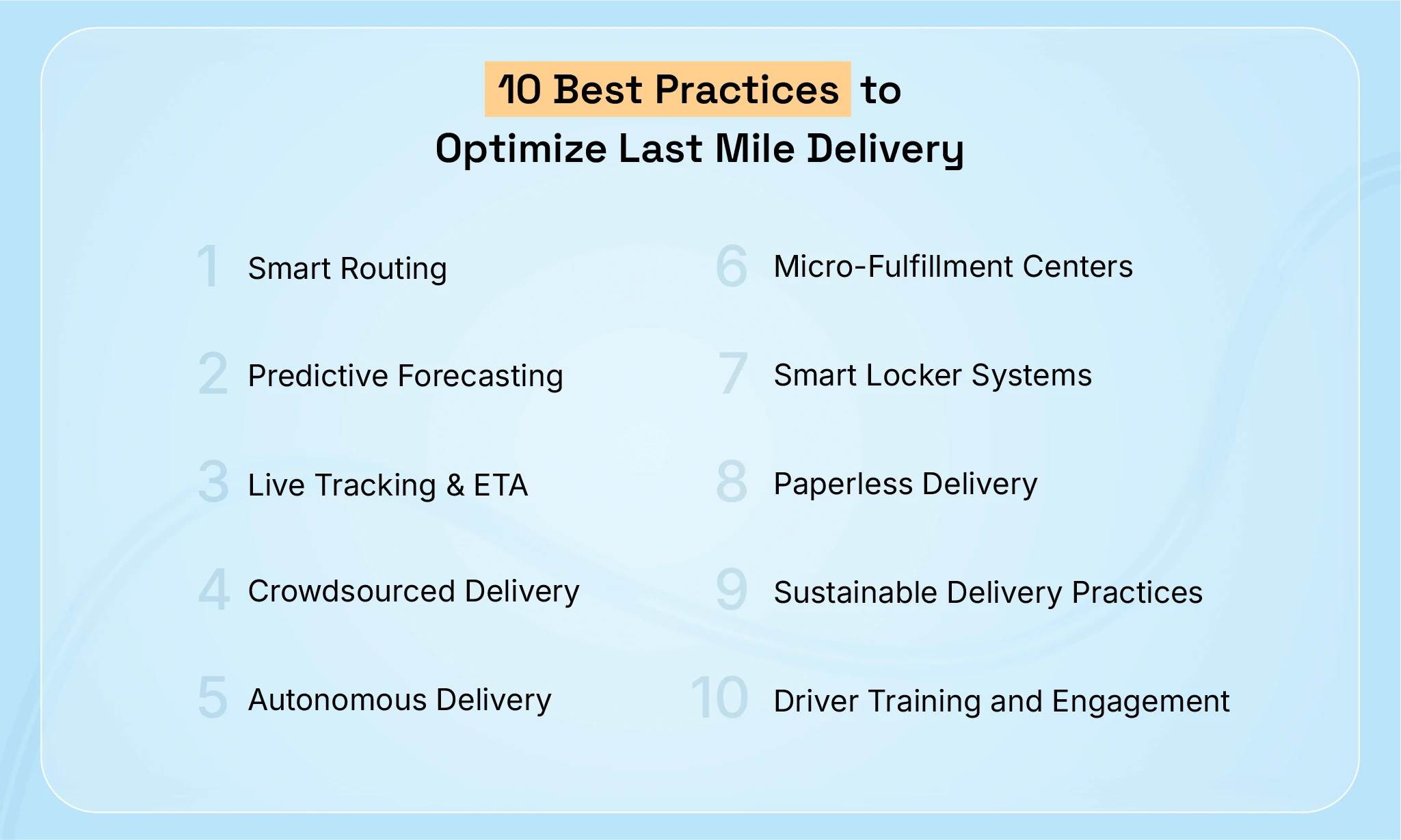
1. Use Smart Route Optimization
Manual route planning struggles with traffic, clustering, time windows, and changing conditions.
Automated routing tools factor all these inputs in seconds and generate the most efficient routes.
For freight forwarders operating across cities or regions, these tools also help teams choose right shipping lane based on congestion patterns, delivery urgency, and historical performance, instead of relying on static or familiar paths. This reduces unnecessary detours and improves consistency across deliveries.
Benefits:
Fewer miles
Higher delivery density
Less idle time
Predictable delivery windows
Many companies see improvements immediately once routing becomes automated.
2. Use Predictive Analytics for Forecasting
Predictive analytics helps you predict:
Peak order days
Traffic patterns
Customer behavior
Weather disruptions
Fleet capacity issues
This allows you to prepare your team before issues arise instead of reacting late.
3. Provide Real-Time Tracking and Accurate ETAs
Customers want transparency.
Real-time updates reduce support tickets and help customers plan their day.
For operations teams, live tracking makes it easier to:
Catch delays
Adjust routes
Help drivers
Notify customers ahead of time
It also helps reduce failed deliveries.
4. Consider Crowdsourced Delivery for Peak Times
Gig drivers can support your core fleet during busy seasons or unexpected spikes.
Benefits:
Flexibility
Faster order handling
Lower labor pressure
It is not a replacement for your main fleet, but a powerful supplement when demand surges.
5. Experiment With Drones and Autonomous Delivery Vehicles
Drones and autonomous vehicles are still evolving, but they are becoming more common for:
Remote locations
Lightweight packages
Low-contact deliveries
They help bypass traffic and reduce driver dependence over time.
6. Use Micro-Fulfillment Centers
Micro-fulfillment centers store inventory closer to customers.
They shorten travel distances and allow faster same-day or next-day delivery.
These small hubs are becoming popular in dense urban areas where speed is a competitive advantage.
7. Install Smart Locker Systems
Smart lockers are a game-changer when customers are not home.
They reduce:
Redelivery attempts
Failed deliveries
Delivery route detours
Customers pick up packages at their convenience while drivers complete more stops in less time.
8. Implement Contactless and Paperless Delivery
Customers expect smooth handovers.
Electronic proof of delivery and contactless options allow:
Photos
Geo-stamps
Notes
Digital signatures
This reduces disputes and speeds up the delivery process.
9. Adopt Sustainable Delivery Practices
Eco-friendly last-mile strategies include:
Using electric or hybrid vehicles
Reducing mileage through optimized routing
Consolidating deliveries
Reducing packaging waste
Sustainability is not only a trend. It is quickly becoming a customer expectation.
10. Invest in Driver Training and Engagement
Drivers are the heart of last-mile delivery.
A well-trained and motivated driver can increase delivery quality instantly.
Strong programs provide:
Clear SOPs
Real-time feedback
Safety training
Incentives
Mobile tools that reduce frustration
Happy drivers deliver better experiences.
Trends and Innovations in Last Mile Delivery
The last mile landscape is evolving rapidly with innovations such as:
Micro-warehousing
Small, localized warehouses improve speed and reduce long routes.
Crowdshipping models
Flexible gig drivers support fast fulfillment.
Sustainable delivery initiatives
More companies are switching to electric fleets and eco-friendly routing.
AI-based route planning
AI learns traffic patterns and adjusts routes in real time.
Advanced tracking and predictive logistics
Better visibility lowers risks and increases trust.
These innovations will continue shaping the next decade of last-mile delivery.
How Last Mile Delivery Software Helps
Last-mile delivery software is the backbone of modern logistics.
It centralizes everything you need for efficient delivery operations.
Core benefits:
Automated route optimization
Real-time driver tracking
ETA prediction
Proof of delivery
Driver communication tools
Reporting and analytics
Integration with your OMS, WMS, or ERP
Most of the best practices above are nearly impossible to execute manually. Software is what makes them scalable and is the driving force behind the broader digital transformation in logistics.
Conclusion
Optimizing last-mile delivery is no longer optional. It is a strategic advantage that improves costs, boosts customer satisfaction, and strengthens your overall logistics network.
Whether you use advanced routing, predictive analytics, micro-fulfillment, or contactless delivery, each improvement helps you build a more reliable and customer-friendly delivery experience.
The companies that invest in smarter last-mile operations today will be the ones customers trust tomorrow.
Frequently Asked Questions (FAQ)
1. How can I make my last-mile delivery more efficient?
Use smart routing, real-time tracking, flexible delivery options, and strong driver training.
2. How do I solve last-mile delivery challenges?
Focus on route planning, visibility, customer updates, and minimizing failed deliveries.
3. What are the key KPIs for last-mile delivery?
Some common KPIs include on-time delivery rate, cost per delivery, first-attempt success rate, and route efficiency.
4. How is AI used in last-mile delivery?
AI helps with predictive routing, demand forecasting, ETA accuracy, and dynamic adjustments based on real-time conditions.
Don't forget to share this blog!


