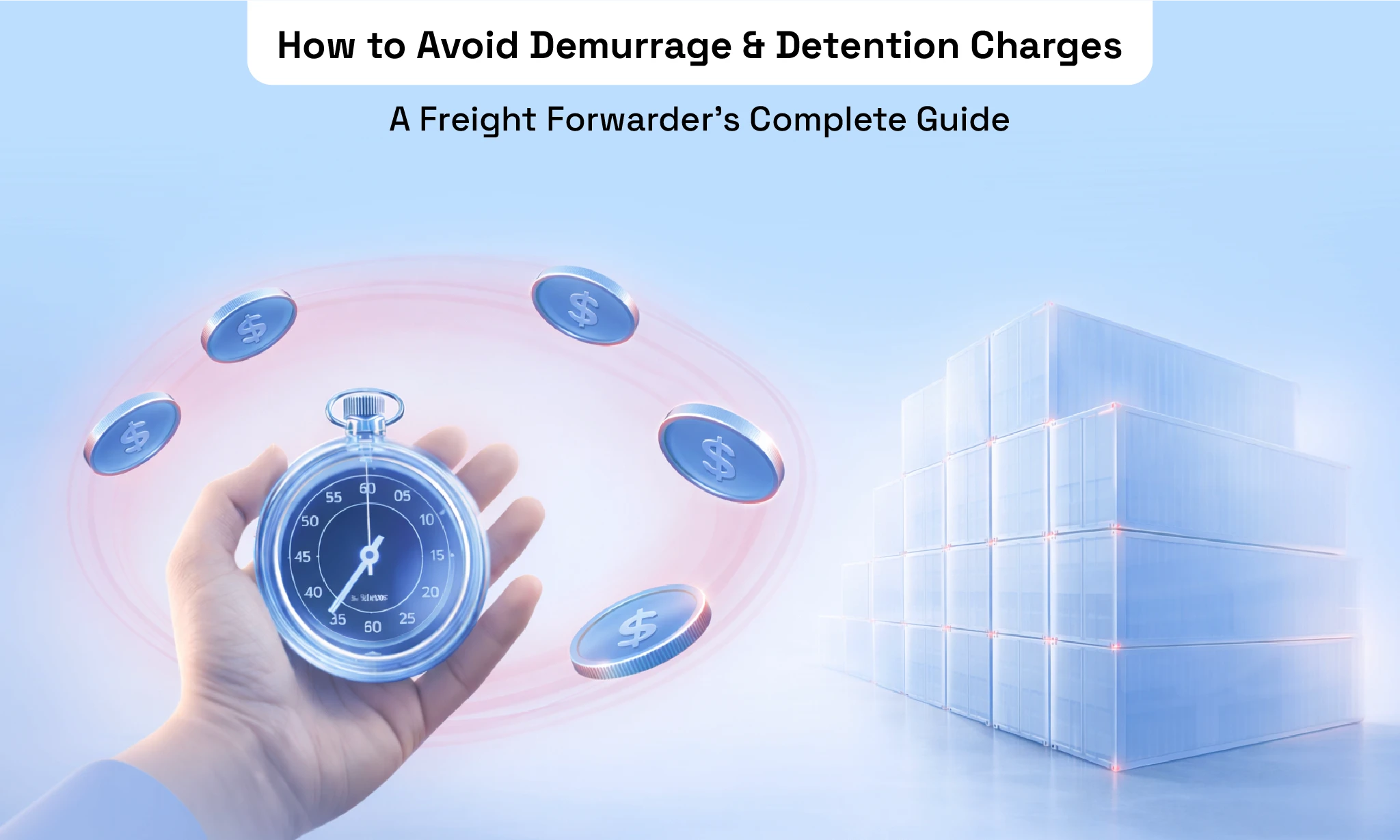
How to Avoid Demurrage and Detention Charges: A Freight Forwarder's Complete Guide
Author:
Dharshini Balamurugan
Published On:
Feb 13, 2026
1 min read
Demurrage and detention fees can quickly eat into a freight forwarder's profits. These charges occur when containers or cargo stay at the port or with the shipping line longer than the allowed free time. For small and medium freight forwarding businesses, unexpected fees can disrupt cash flow and affect client relationships.
The good news is that with proper planning, communication, and operational practices, these charges are largely preventable. This guide covers practical strategies freight forwarders can adopt to minimize demurrage and detention costs while keeping shipments moving smoothly.
Proven Strategies to Eliminate Demurrage Charges
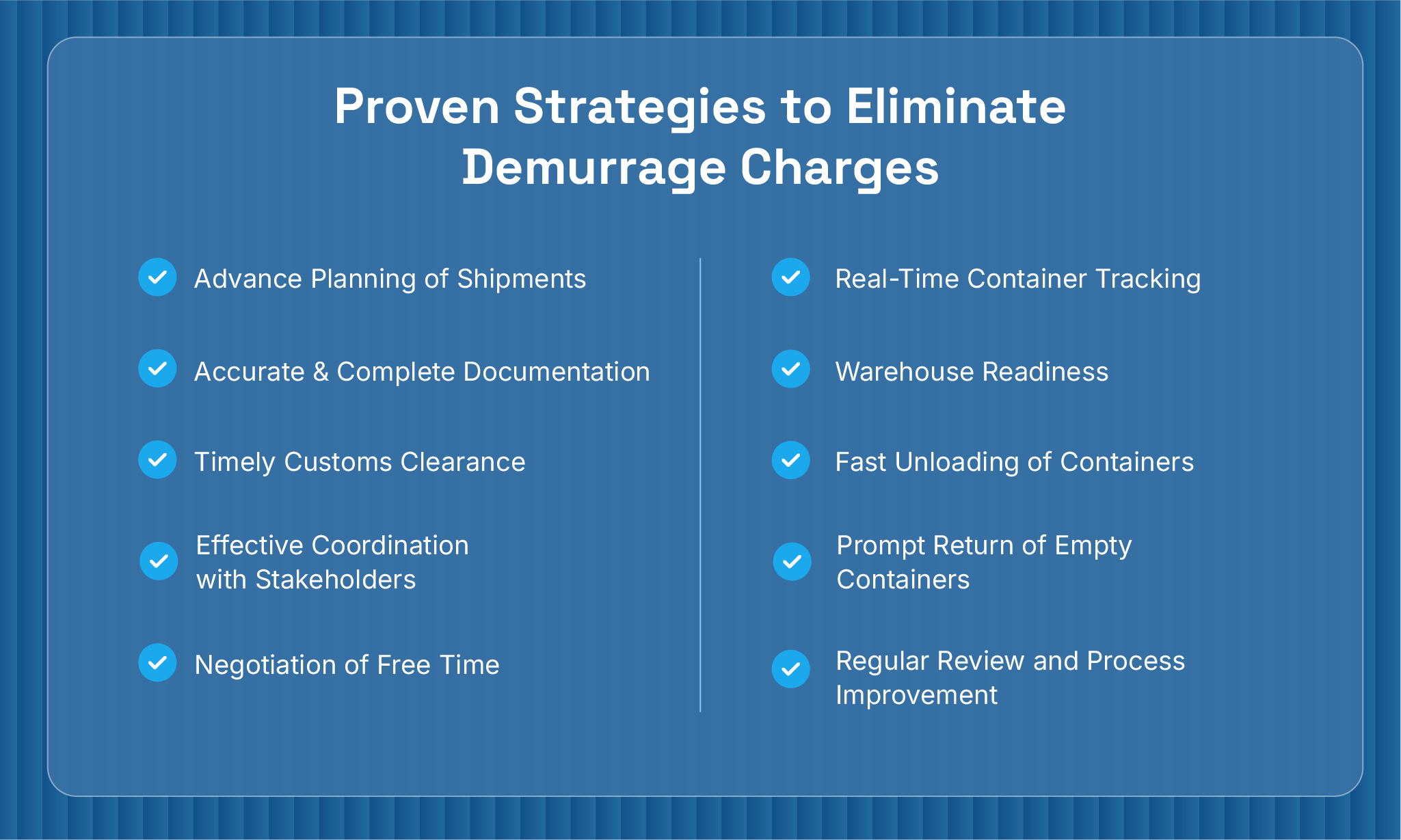
1. Advance Planning of Shipments
One of the simplest ways to avoid demurrage is by planning shipments in advance. This means booking vessels early, preparing cargo ahead of time, and aligning delivery schedules with port operations. Last-minute shipments increase the risk of congestion and delays, which can trigger demurrage.
Freight forwarders should also forecast peak seasons and holidays. Ports are typically busier during certain times of the year, so planning early ensures containers are moved before congestion builds. Advanced planning creates buffer time to handle unforeseen delays without incurring extra charges.
2. Accurate and Complete Documentation
Incomplete or incorrect documentation is one of the leading causes of demurrage fees. Customs, port authorities, and carriers require precise bills of lading, commercial invoices, packing lists, and other shipping documents.
Double-check all paperwork before submission to avoid delays. A missing signature, incorrect HS code, or mismatched weight can result in customs holds or container detention. Many modern forwarders now utilize dedicated customs compliance software to automate these checks, ensuring that every digital filing meets local regulatory standards before the cargo even reaches the port. Maintaining a document checklist or using automated tools for each shipment can prevent these costly errors.
3. Timely Customs Clearance
Delays in customs clearance are a major reason demurrage accumulates. Freight forwarders should ensure all regulatory filings, taxes, duties, and permits are handled well before the vessel arrival.
One of the most effective ways to stay ahead is to automate customs compliance process workflows using digital integration. By transitioning away from manual data entry, forwarders can ensure that HS codes are verified and duties are calculated with higher accuracy, reducing the likelihood of time-consuming audits or holds. Coordination with customs brokers remains critical, but leveraging automation ensures paperwork is ready the moment the container reaches the port.
4. Effective Coordination with Stakeholders
Smooth communication between shippers, carriers, customs, and consignees is essential. Misalignment or delays in information flow can result in containers staying at the port longer than necessary.
Regular updates, clear roles, and defined responsibilities ensure all parties act promptly. A single missed email or delay in confirmation can extend port dwell time, increasing demurrage fees.
5. Negotiation of Free Time
Freight forwarders can negotiate longer free time with carriers or shipping lines. Depending on the trade lane, vessel, or season, shipping lines may offer additional free time to preferred customers.
Even an extra day or two can make a difference in reducing demurrage charges, especially during peak congestion periods. Negotiating favorable terms upfront avoids surprises later.
6. Real-Time Container Tracking
Knowing exactly where containers are at all times helps prevent unnecessary delays. Freight forwarders should leverage tracking tools to monitor shipment movement from port to consignee.
Real-time tracking enables proactive action if a container is delayed. Teams can coordinate pickups, schedule trucks, or contact the carrier before demurrage begins to accumulate.
7. Warehouse Readiness
Before containers arrive, ensure that warehouse space, labor, and equipment are ready to handle unloading. Delays in unloading due to insufficient manpower or inadequate space can lead to detention charges.
Planning labor schedules and staging areas in advance ensures cargo moves quickly from the port to the warehouse, reducing idle container time.
8. Fast Unloading of Containers
The faster a container is unloaded, the sooner it can be returned to the shipping line. Efficient unloading processes, including trained staff, proper equipment, and organized inventory placement, prevent unnecessary detention fees.
Time studies and standard operating procedures for unloading can improve speed and reduce errors, ensuring containers are returned promptly.
9. Prompt Return of Empty Containers
Once cargo is unloaded, the empty container must be returned to the shipping line as quickly as possible. Even short delays can trigger detention charges.
Scheduling dedicated transportation for empty returns and coordinating with carriers in advance ensures containers leave the warehouse promptly.
10. Regular Review and Process Improvement
A systematic review of operational processes helps identify bottlenecks that lead to demurrage. Tracking trends such as delayed customs filings, slow unloading times, or poor coordination highlights areas for improvement.
Continuous process improvement ensures that your operation adapts to changing conditions, reducing costs over time.
Building a Prevention-First Culture
A culture that prioritizes prevention over reaction can make a significant difference in demurrage and detention management. This approach starts with clear standard operating procedures and strong internal accountability.
Internal SOPs
Create written procedures for handling shipments, documentation, and container returns. Staff should be trained to follow these SOPs consistently to avoid errors that lead to fees.
Client Education and Expectation Setting
Educating clients about free time, container return deadlines, and documentation requirements helps manage expectations. When clients understand their responsibilities, shipments move more smoothly, reducing potential demurrage costs.
Technology Stack
Investing in technology helps automate notifications, track containers, and manage documentation. Platforms like CargoEZ provide end-to-end visibility, real-time alerts, and workflow automation, making it easier to prevent delays and stay compliant with carrier rules.
KPI Tracking
Monitoring key performance indicators such as average container dwell time, demurrage incidents, and on-time customs clearance enables teams to make data-driven decisions. This visibility ensures corrective actions are taken before fees accumulate.
Conclusion
Demurrage and detention charges can significantly impact freight forwarder profitability, but with careful planning, communication, and operational efficiency, these costs are largely preventable. Strategies such as advance shipment planning, accurate documentation, real-time tracking, efficient unloading, and a prevention-first culture help freight forwarders stay ahead of potential delays.
Technology plays a critical role in reducing demurrage risk. Platforms like CargoEZ centralize operations, automate key workflows, and provide real-time visibility into shipments, enabling freight forwarders to save time and costs while improving customer satisfaction.
By combining strong processes, staff training, and technology, freight forwarders can minimize demurrage and detention charges, protect margins, and create a more reliable, competitive business.
Don't forget to share this blog!