Freight Forwarding Technology: Is It Worth the Cost?
Author:
Pamela
Published On:
1 min read
Freight forwarding has always operated at the intersection of complexity and precision. Multiple stakeholders, tight timelines, regulatory scrutiny, and thin margins leave little room for error. In recent years, technology has positioned itself as the solution to many of these challenges. Yet for many freight forwarders, the question remains unresolved.
Is investing in new freight forwarding technology truly worth the cost?
Adopting new systems often requires financial commitment, internal change, and short-term disruption. At the same time, continuing with legacy systems, spreadsheets, and disconnected tools carries its own risks, many of which compound quietly over time.
This article explores the real cost of freight forwarding technology, what businesses gain in return, where investments often fall short, and how to evaluate whether adoption makes strategic sense for your organization.
The Real Cost of Freight Forwarding Technology
When freight forwarders evaluate technology, the focus often stays on visible costs like licensing fees, implementation charges, or subscription pricing. These numbers are easy to quantify and closely reviewed during budget discussions. However, the true cost of technology extends far beyond the software invoice itself.
Implementation brings additional investments that are frequently underestimated. Onboarding, data migration, and team training require time and effort from operations, finance, and management. During the transition, productivity may dip as teams adjust to new workflows and learn advanced features. These short-term inefficiencies can make adoption feel expensive when viewed narrowly, even though they are a natural part of any meaningful system upgrade.
What is often overlooked is the long-term cost of staying with outdated systems. Manual work, slow decision-making, limited visibility, and higher operational risk quietly drain productivity and margins over time. The real comparison is not the cost of new technology versus doing nothing, but the cost of modernizing versus continuing to operate with tools that no longer support the scale and complexity of the business.
The Hidden Cost of Not Adopting New Technology
Many freight forwarding businesses continue to operate with legacy systems supplemented by spreadsheets, emails, and manual tracking. While this setup may feel familiar and low-cost on the surface, it introduces inefficiencies that grow as operations scale.
Manual data entry increases the risk of errors, leading to shipment delays, client complaints, and compliance issues. Disconnected systems create duplicated work across teams, adding inefficiencies that quietly erode margins.
In many cases, the hesitation around upgrading freight software stems from a fear of temporary downtime, yet this delay often forces teams to rely on reactive decisions instead of proactive control, resulting in missed opportunities or slow responses to disruptions.
Compliance risks rise when documentation depends on manual checks rather than system-driven validation. Financial visibility also suffers when costing, billing, and reconciliation are disconnected from operations. Over time, these gaps lead to higher labor costs, delayed invoicing, revenue leakage, compliance penalties, and reduced customer satisfaction.
Why Freight Forwarding Technology Feels Risky
Despite clear challenges, many freight forwarders hesitate to modernize their systems. This hesitation is rarely about rejecting technology itself. It stems primarily from managing risk in already complex operations.
Freight forwarding involves multiple teams, trade lanes, and partners. Leaders often worry that new systems may disrupt workflows that already function, even if imperfectly. Furthermore, the market is saturated with various types of freight forwarding software, and choosing a platform that doesn’t align with a company’s specific niche, be it ocean, air, or land can lead to costly integration hurdles. Concerns about user adoption, data accuracy during migration, and reliance on vendors unfamiliar with the nuances of freight operations amplify this hesitation.
Skepticism is reinforced by past experiences. Some platforms promise end-to-end solutions but deliver fragmented functionality, requiring additional workarounds. Others demand heavy customization to handle basic freight workflows, increasing dependency on external support.
These concerns are valid. Technology adoption without proper evaluation can introduce new problems instead of solving existing ones. The risk lies not in adopting technology itself, but in adopting the wrong technology or implementing it poorly, highlighting the need for a structured approach to selection and onboarding.
What Modern Freight Forwarding Technology Actually Delivers
When implemented correctly, modern freight forwarding technology goes beyond simple digitization. It introduces structure, visibility, and consistency across operations, enabling teams to operate more efficiently and strategically.
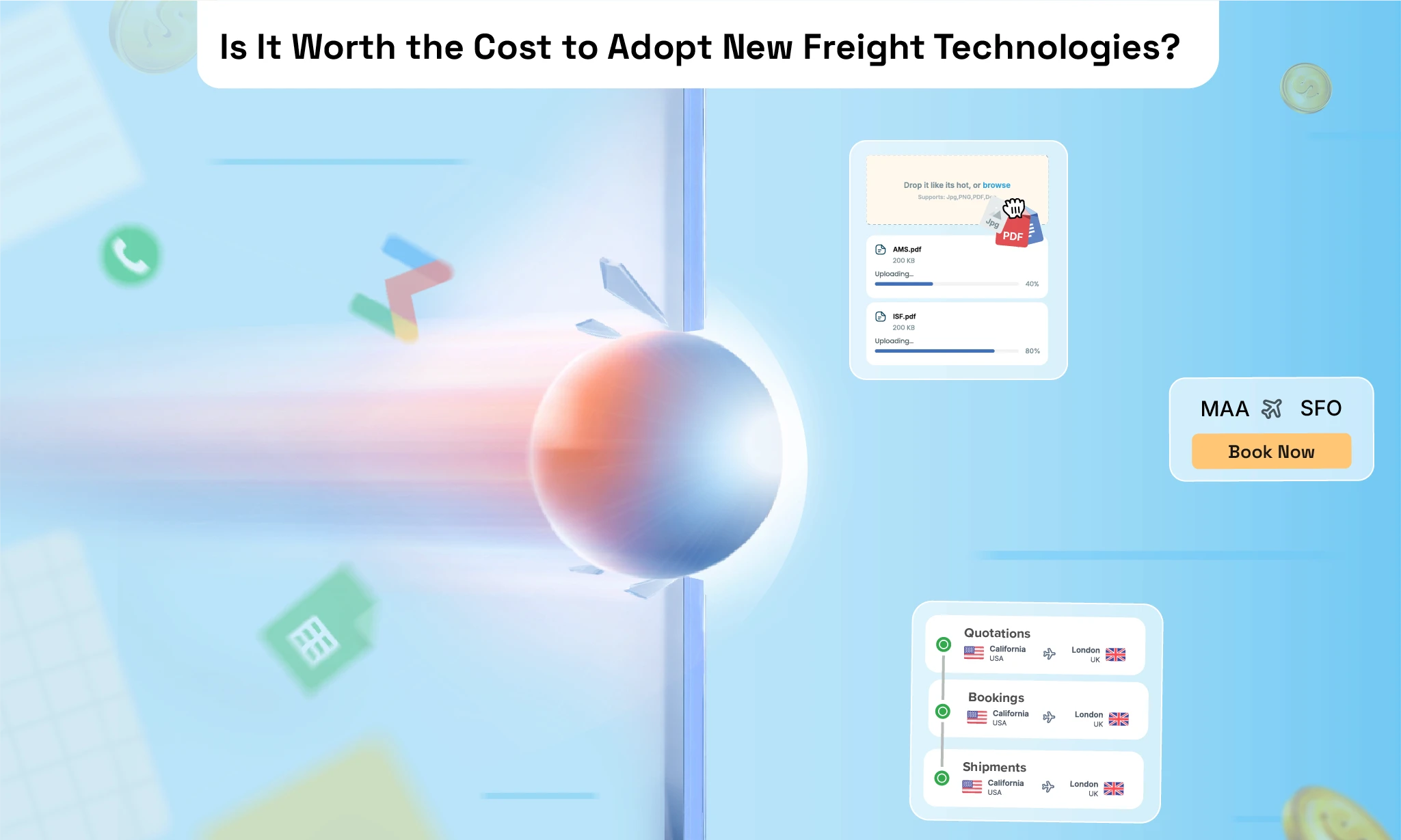
At its core, a modern platform connects the entire shipment lifecycle. Booking, documentation, execution, tracking, billing, and reporting operate within a single system, allowing data to flow seamlessly across departments. This connectivity eliminates duplications and reduces errors. Beyond simple automation, the core freight forwarding software benefits lie in the ability to transform raw data into actionable intelligence, allowing teams to focus on high-value tasks rather than manual entry.
For leadership teams, this translates into clearer insights. Shipment-level profitability, operational bottlenecks, and performance trends become visible rather than assumed. The value of technology lies not in replacing people, but in enabling teams to operate with greater control, accuracy, and confidence.
Measuring Return on Investment Beyond Cost Savings
Return on investment in freight forwarding technology is often framed narrowly around cost reduction. While labor savings and efficiency gains are important, they represent only a fraction of the potential value.
Technology also improves revenue protection by reducing billing errors, missed charges, and revenue leakage. It accelerates cash flow through faster, more accurate invoicing and strengthens customer relationships by enabling transparent communication and reliable delivery updates.
Operational resilience is another critical return. Systems that scale smoothly allow businesses to grow without proportional increases in overhead. Compliance readiness reduces exposure to regulatory risk.
For many organizations, the most significant ROI comes from improved decision-making. Access to real-time data enables leadership to respond quickly to market changes, customer demands, and operational challenges. This ability to act proactively rather than reactively creates long-term competitive advantages that far exceed immediate cost savings.
When Technology Investments Fail to Deliver Value
Not every technology investment succeeds. Failures typically stem from misalignment rather than technology limitations. Understanding common pitfalls can help organizations avoid wasted investment.
One common issue is selecting software that addresses only part of the workflow. This forces teams to maintain parallel systems, undermining the benefits of integration and perpetuating inefficiencies.
Underestimating change management is another frequent mistake. Without proper onboarding and internal alignment, teams may resist adoption or revert to manual workarounds, nullifying the anticipated gains.
Vendor fit also matters. Platforms built without deep freight expertise may struggle to support real-world operational complexity, leading to frustration and underutilization.
These failures reinforce skepticism around technology, even though the root cause is often poor selection and implementation rather than the concept of adoption itself. Careful evaluation and strategic planning are critical to success.
Evaluating Whether Adoption Makes Sense for Your Business
Before adopting new freight forwarding technology, organizations should assess readiness across several dimensions.
Operational complexity is a key factor. As shipment volumes, trade lanes, and customer expectations grow, manual systems become increasingly fragile. Businesses must determine whether technology is necessary to manage current and projected workloads effectively.
Financial visibility is another indicator. If profitability is difficult to measure accurately at the shipment level, integrated systems can provide immediate value. Accurate, real-time financial insights allow businesses to make better pricing, investment, and operational decisions.
Compliance exposure should also be considered. Businesses operating across multiple regions face growing regulatory demands, which manual processes struggle to support. Automated validation improves accuracy, reduces risk, and ensures regulatory compliance.
Finally, leadership alignment is essential. Technology adoption works best when it is viewed as a strategic investment rather than a short-term expense. Organizations must commit to change, training, and process redesign to achieve full benefits.
Assessing Needs and Planning for Growth
Before selecting and implementing a technology solution, it’s critical to assess where the organization currently stands and understand its specific needs. A thorough evaluation of pain points, workflow inefficiencies, and operational bottlenecks helps ensure the software chosen aligns with real requirements.
Expansion plans also play a crucial role. Companies planning to grow their shipment volumes, enter new markets, or increase trade lanes must consider technology that scales with their operations. A solution that fits today’s needs but cannot adapt to future demands will quickly become a liability.
Recognizing that change is the only constant in the freight forwarding industry encourages leaders to adopt platforms that are flexible, modular, and upgradeable. Businesses that align technology with growth strategies not only improve current operations but also position themselves for long-term resilience and competitive advantage.
The Long-Term Strategic Value of Freight Technology
Freight forwarding technology is not just about solving today’s problems. It is about preparing for an industry that continues to evolve.
Customer expectations for transparency will only increase. Regulatory requirements will become more complex. Competition will favor organizations that operate efficiently, predictably, and at scale.
Technology provides the foundation for this future. It enables freight forwarders to move from reactive operations to structured, data-driven execution. Over time, this shift becomes a competitive differentiator rather than a cost center.
Where CargoEZ Fits In
CargoEZ is built for freight forwarders who want to adopt technology without adding complexity.
The platform brings together operations, finance, compliance, and visibility into one unified freight management system. It is designed to replace fragmented workflows with structured, system-led processes that scale as businesses grow.
CargoEZ supports end-to-end shipment management, compliance-ready documentation, and real-time visibility across freight operations. Rather than forcing teams to adapt to rigid software, CargoEZ aligns with how freight forwarding actually works, reducing adoption friction and accelerating time to value.
For organizations evaluating whether technology adoption is worth the cost, CargoEZ offers a practical, purpose-built approach to modern freight management.
Is It Worth the Cost?
The question is not whether freight forwarding technology is expensive. The real question is whether continuing without it is sustainable.
As operations scale and complexity increases, the cost of inefficiency, risk, and missed opportunities grows steadily. Modern freight technology offers a way to regain control, improve visibility, and build resilience into everyday operations.
For freight forwarders looking to compete in a demanding and evolving market, technology is no longer optional. It is an investment in long-term stability, growth, and confidence. When chosen thoughtfully and implemented with intent, freight forwarding technology is not just worth the cost, it becomes a strategic advantage.
Frequently Asked Questions (FAQs)
1. What is freight forwarding technology?
Freight forwarding technology refers to software platforms designed to manage shipments, documentation, tracking, compliance, costing, billing, and reporting within a single system. These platforms replace manual processes and disconnected tools with integrated, structured workflows.
2. Is freight forwarding software only useful for large companies?
No. Small and mid-sized freight forwarders often see the greatest impact from technology adoption. As shipment volumes grow, manual processes become harder to manage. Technology helps SMEs scale operations without proportionally increasing overhead or operational risk.
3. How long does it take to see ROI from freight technology?
ROI timelines vary based on shipment volume, workflow complexity, and adoption levels. Many forwarders begin seeing benefits within a few months through reduced manual work, faster invoicing, improved visibility, and fewer operational errors.
4. What are the biggest risks of adopting new freight software?
The main risks come from choosing the wrong solution or underestimating change management. Poorly aligned software, limited freight expertise, or insufficient onboarding can reduce adoption and value. Careful evaluation and structured implementation significantly reduce these risks.
5. Can technology help reduce compliance risks?
Yes. Modern freight platforms include system-driven validations, standardized documentation workflows, and audit-ready records. These features reduce reliance on manual checks and lower the risk of compliance errors, penalties, and delays.
6. How do I know if my business is ready for new technology?
If your teams rely heavily on spreadsheets, manual data entry, or disconnected systems, or if visibility into costs and shipment status is limited, technology can add immediate value. Leadership alignment and willingness to adapt processes are key readiness indicators.
7. Does adopting technology mean replacing staff?
No. Freight technology is designed to support teams, not replace them. By automating repetitive tasks and improving visibility, staff can focus on decision-making, customer service, and higher-value operational work.
Author

Don't forget to share this blog!