How Multi-Modal Rate Structures Work
Author:
Pamela
Published On:
1 min read
Still reconciling multiple carriers, rates, and invoices for what should be one move? Managing separate contracts and invoices can be time-consuming and confusing. Have you heard about the concept of a multi-modal rate structure? It’s a game-changing approach that simplifies the entire logistics process by combining two or more transportation modes under a single, unified rate. This streamlined pricing model not only saves you time and hassle but also enhances cost management and supply chain efficiency.
Curious about how multimodal rate structures actually work, what goes into a multimodal quote, and how they impact your freight spend? This article breaks down the structure, logic, and key components that define multimodal pricing across each leg of the shipment.
What is a Multi-Modal Rate Structure?
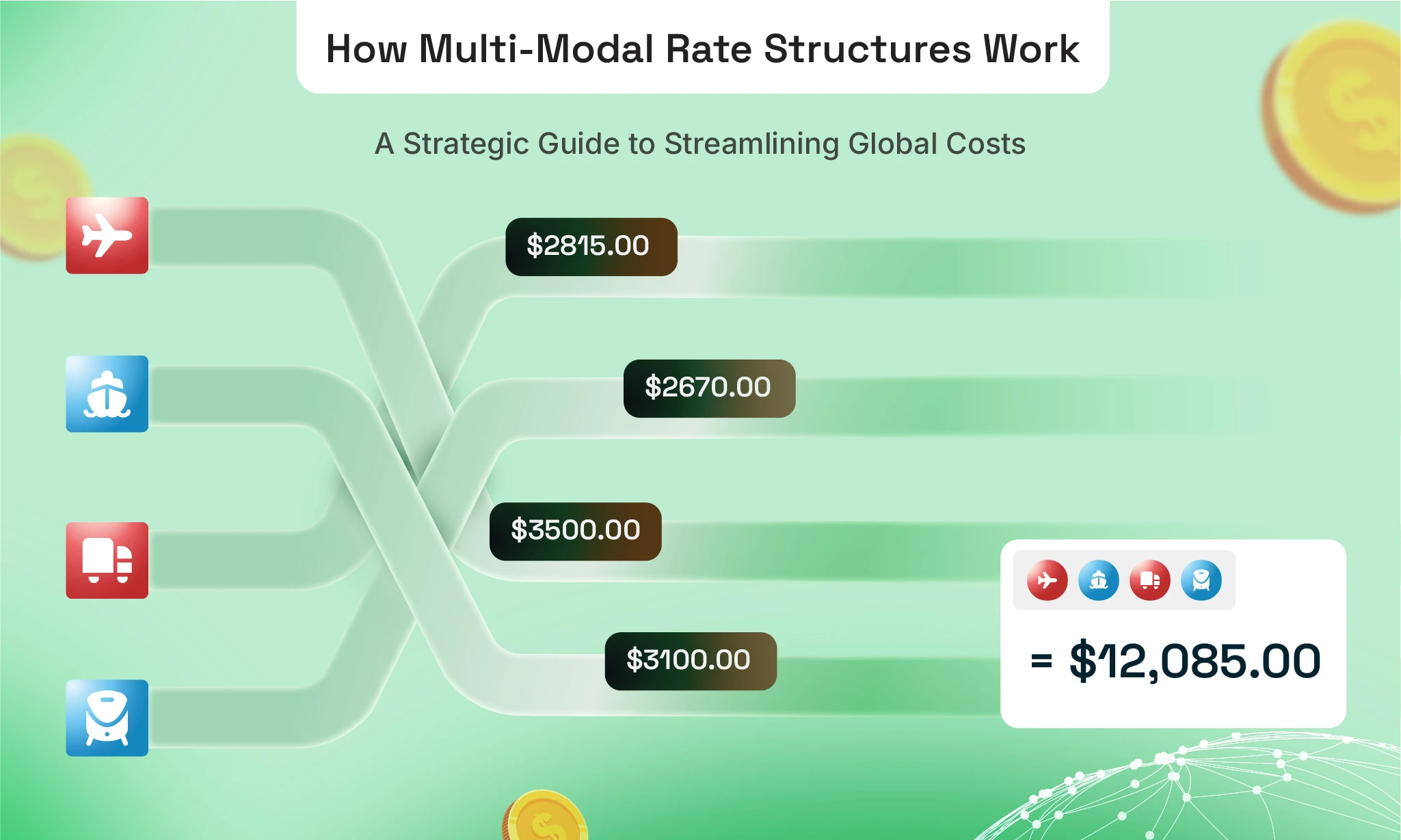
A multi-modal rate structure is a comprehensive pricing model that consolidates the costs of transporting goods using two or more transportation modes under a single contract and unified rate. Unlike traditional shipping arrangements, where each mode, such as road transportation, rail transport, air transport, or sea freight, is billed separately, a multi-modal rate structure integrates all charges into one seamless package.
The multi-modal rate structure reflects this integrated approach by breaking down pricing into core components tied to each leg of the journey, including pre-carriage, main carriage, and on-carriage segments. Each component incorporates mode-specific rates and surcharges, such as terminal handling fees, fuel adjustments, and accessorial charges, all combined into a single invoice.
This unified rate system supports seamless integration across multimodal networks, enabling better route optimization and real-time tracking of shipments. It also facilitates accountability by assigning responsibility for the entire journey to one logistics provider, reducing the complexities often associated with intermodal transport, where multiple contracts and separate billing exist.
The Anatomy of a Multi-Modal Quote
A multimodal quote breaks down the total door-to-door cost into core components that reflect the distinct pricing methods of each transport mode while combining them into one seamless package. Typically, the quote includes base freight charges per leg, terminal and port handling fees, accessorial surcharges, fuel adjustments, and insurance or liability coverage.
Each of these components is calculated using mode-specific formulas such as per container, per ton-kilometer, or per mile rates, and then integrated into a comprehensive rate. This structure provides transparency into cost drivers while maintaining the simplicity of a single invoice and contract.
Pre-Carriage (Origin Drayage & Export Clearance)
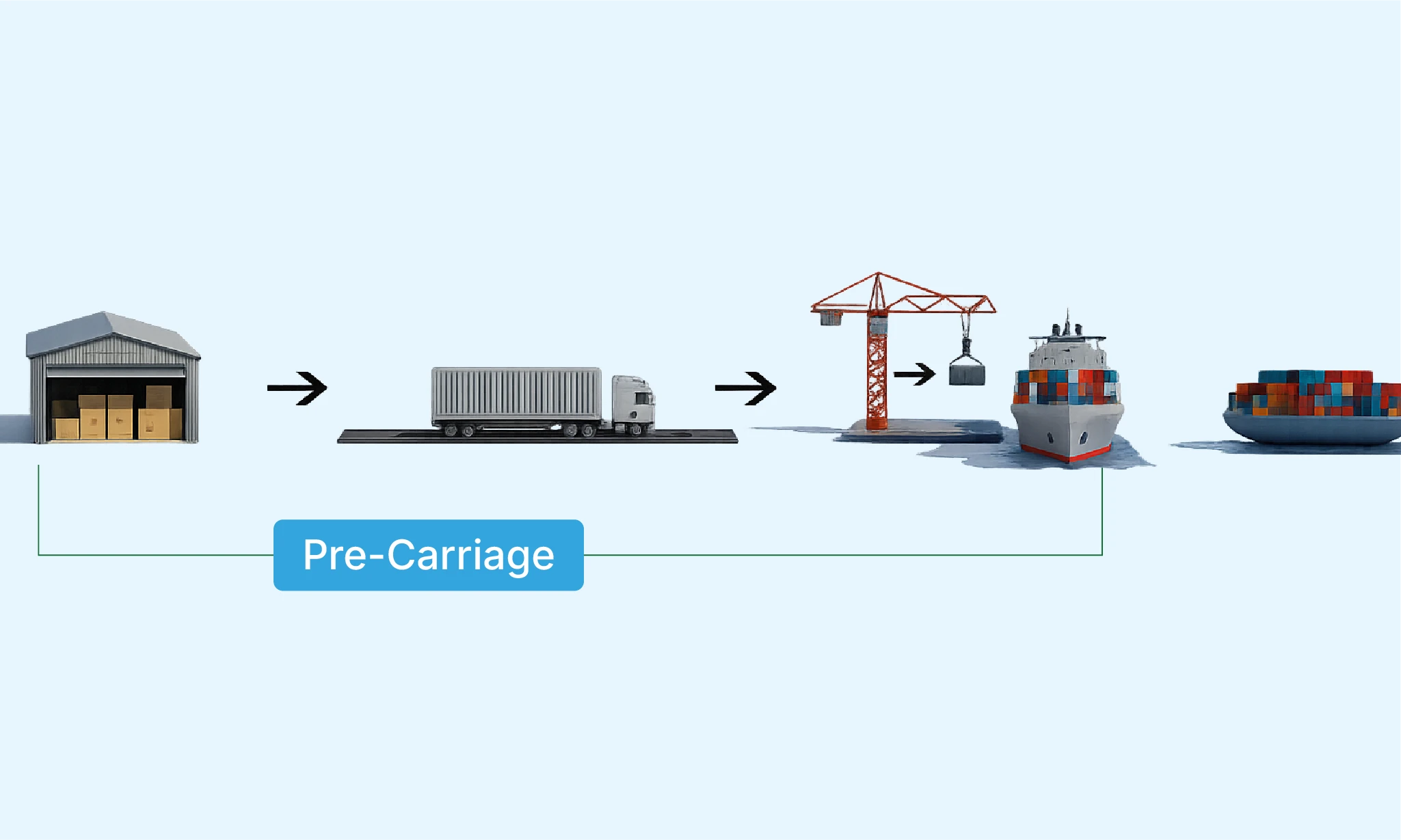
Pre-carriage is the initial phase where cargo moves from the shipper’s premises to the first major transport hub, often a port or rail terminal. Origin drayage involves short-distance trucking, which is priced per mile or per move and plays a critical role in ensuring timely handoff to the next mode.
Alongside physical movement, export clearance covers all customs documentation, regulatory compliance, and export declarations necessary for legal shipment departure. Efficient management of pre-carriage activities within the multimodal rate structure reduces delays and provides shippers with a single point of contact and consolidated billing for these services.
The Main Carriage (The Ocean or Air Leg)
The main carriage usually refers to the longest leg of the journey, often ocean or air transport, where the bulk of the distance and cost is incurred. Ocean freight rates are generally quoted per TEU or FEU container, with bunker adjustment factors and terminal handling charges included.
Air freight, by contrast, is priced per kilogram or chargeable weight, factoring in fuel surcharges and security fees. This segment often represents the largest portion of the multimodal rate and requires careful negotiation to balance cost effectiveness with transit time, especially for time-sensitive or temperature-controlled shipments.
On-Carriage (Arrival Handling & Final Delivery)
On-carriage covers the movement of cargo from the arrival port or terminal to the final destination, usually involving rail and/or truck transport. This phase includes destination drayage, terminal handling at inland intermodal yards, and last-mile delivery.
Each leg has its own pricing metrics. Rail freight is often charged per ton-kilometer or per container, while road transport is priced per mile or per stop. Accessorial charges such as lift-on/lift-off, transloading, and storage fees may also apply. Multimodal rate structures bundle these components to ensure smooth coordination and accountability through the final delivery phase.
Multimodal vs. Intermodal: Why the Rating Logic Changes?
While both multimodal and intermodal transportation involve the use of multiple transport modes, the way rates are structured and applied differ significantly between the two.
Multimodal transportation operates under a single contract with one lead carrier or logistics provider responsible for the entire shipment from origin to destination. Pricing is consolidated into a unified rate that covers all transport stages, along with coordination, liability, and operational oversight.
This integrated approach simplifies billing, communication, and claims handling, while embedding risk management into the overall rate structure. As a result, multimodal pricing emphasizes cost predictability and end-to-end accountability.
Intermodal transportation, by contrast, involves separate contracts for each mode of transport. Although cargo typically remains in the same container to reduce physical handling, each leg is priced, managed, and billed independently.
This separation influences rating logic by fragmenting costs across multiple carriers, each with its own pricing models, surcharges, and liability terms. While intermodal shipments may offer competitive base rates for individual legs, they often require greater administrative effort to manage invoices, contracts, and potential claims.
From a cost perspective, multimodal rate structures are designed to reduce variability by consolidating charges into a single commercial framework. Intermodal pricing can be more transparent at a per-leg level, but it also exposes shippers to fluctuating costs, accessorial charges, and operational risks that arise when coordination across modes is not tightly aligned.
Operationally, multimodal arrangements reduce internal complexity by limiting the number of stakeholders involved and providing a single point of responsibility. Intermodal movements place more coordination responsibility on the shipper, increasing the need for oversight across documentation, timelines, and carrier performance.
Ultimately, the choice between multimodal and intermodal transport is not just a routing decision. It is a strategic choice that affects pricing structure, risk allocation, administrative effort, and total landed cost. Understanding how and why rating logic differs allows shippers to select the transport model that best aligns with their cargo requirements and service expectations.
The "Hidden" Components: Accessorials and Surcharges
Beyond base freight and terminal fees, multimodal rate structures include accessorial charges and surcharges that can significantly impact total costs. Accessorials cover services such as detention, demurrage, chassis rental, and specialized equipment usage. Surcharges adjust for fluctuating market conditions like fuel price volatility, security fees, peak season premiums, or low-sulfur fuel compliance.
These components are often governed by detailed contract clauses specifying calculation methods and caps. Being aware of these "hidden" costs and negotiating clear surcharge schedules is vital to avoid unexpected charges and maintain budget predictability.
Port/Terminal Fees & THC
Terminal Handling Charges (THC) and port fees are critical cost elements within multimodal rate structures. They cover cargo handling at origin and destination terminals, including loading, unloading, storage, and gate operations.
THCs are typically charged per container or per ton and can vary significantly by port due to differences in infrastructure, labor practices, congestion levels, and local regulatory requirements. These charges may be billed by carriers, terminal operators, or port authorities, depending on the location and commercial arrangement.
From a pricing perspective, THC inclusion is not always consistent across multimodal quotes. In some cases, these fees are embedded within the main freight rate, while in others they are charged separately at origin, destination, or both. This distinction directly impacts cost transparency and can lead to unexpected expenses if not clearly defined upfront.
Effective management of port and terminal fees requires clarity on what is included in the contracted rate, close monitoring of free time allowances, and coordination between transport modes to avoid unnecessary storage or handling charges. Transparent handling of THCs is essential for optimizing multimodal logistics costs and ensuring smooth cargo transfers throughout the shipment lifecycle.
Demurrage and Detention in Multi-Modal Moves
Demurrage and detention fees are common cost challenges in multimodal transport and can significantly inflate freight spend if not managed carefully. Demurrage charges apply when containers remain at a port or terminal beyond the agreed free time, while detention fees accrue when equipment is held outside the terminal longer than permitted. Both charges are typically billed on a per-day basis and can escalate rapidly during congestion, documentation delays, or misalignment between transport stages.
In multimodal movements, these risks are often amplified due to handoffs between modes and dependencies on customs clearance, on-carriage availability, and equipment scheduling. Delays in any one stage can trigger demurrage or detention even when the main carriage is completed on time.
Clearly defined demurrage and detention terms within multimodal contracts are essential, including free time allowances, rate slabs, and responsibility allocation. Close monitoring of container milestones and proactive coordination across modes helps shippers avoid unnecessary charges and maintain better control over total logistics costs.
Documentation’s Impact on Your Rate Structure
Documentation requirements influence multimodal rate structures by affecting administrative costs, liability, and compliance. Accurate and timely paperwork, such as bills of lading, customs declarations, certificates of origin, and temperature excursion records, is essential for smooth cargo flow and legal adherence.
Some multimodal contracts bundle documentation services within the rate, while others itemize them separately. Digitalization and standardized electronic documents are increasingly integrated into rate structures, improving transparency, reducing errors, and facilitating audit trails.
Demurrage and detention fees are common cost challenges in multimodal transport and can significantly inflate freight spend if not managed carefully. Demurrage charges apply when containers remain at a port or terminal beyond the agreed free time, while detention fees accrue when equipment is held outside the terminal longer than permitted.
Both charges are typically billed on a per-day basis and can escalate rapidly during congestion, documentation delays, or misalignment between transport stages.
In multimodal movements, these risks are often amplified due to handoffs between modes and dependencies on customs clearance, on-carriage availability, and equipment scheduling. Delays at any stage can trigger demurrage or detention even when the main carriage is completed on time.
Clearly defined demurrage and detention terms within multimodal contracts are essential, including free time allowances, rate slabs, and responsibility allocation. Close monitoring of container milestones and proactive coordination across modes help shippers avoid unnecessary charges and maintain better control over total logistics costs.
Strategy: How to Optimize Your Multi-Modal Freight Spend
Optimizing multimodal freight spend requires a strategic approach that combines contract negotiation, shipment analysis, and technology adoption. The process begins with detailed shipment data analysis by lane, volume, frequency, and cargo profile to identify primary cost drivers and optimization opportunities across the network.
Selecting the right pricing model is critical. Options such as all-in rates, leg-based pricing, or tiered volume discounts should align with operational complexity, cost visibility requirements, and risk tolerance. Clear definitions of what is included in the base rate versus accessorial charges help prevent cost leakage and improve budget predictability.
Contract negotiations should focus not only on base freight rates but also on surcharge structures, free time allowances, demurrage and detention terms, and liability allocation. Establishing transparent rules for rate adjustments and exceptional charges reduces exposure to unexpected costs during market volatility.
Technology plays a central role in cost optimization. Transport management systems (TMS) with real-time rate calculation, shipment tracking, document management, and analytics provide end-to-end visibility and support data-driven decision-making. These tools also enable performance monitoring across carriers and transport modes, helping organizations align cost with service reliability.
Regular contract reviews are essential to ensure alignment with changing market conditions, regulatory requirements, sustainability objectives, and service performance metrics. Continuous evaluation and proactive adjustment of multimodal strategies allow organizations to maintain cost efficiency while supporting resilient and scalable supply chains.
Conclusion
A clear grasp of multimodal rate components, including accessorials, terminal charges, documentation requirements, and demurrage risks, allows businesses to anticipate costs rather than react to them. When combined with structured analysis and the right digital tools, organizations can move from fragmented decision-making to coordinated, data-driven logistics planning.
Frequently Asked Questions (FAQs)
1. How does multi-modal transportation differ from intermodal transportation?
Multimodal transportation operates under a single contract with one logistics provider responsible for the entire shipment, consolidating costs and coordination. Intermodal transportation involves separate contracts for each mode, with costs and management handled independently for each leg.
2. What are the main components of a multi-modal rate quote?
A typical multi-modal rate quote includes base freight charges per leg, terminal and port handling fees, accessorial surcharges, fuel adjustments, and insurance or liability coverage. Each component reflects the pricing methods of the specific transport mode involved.
3. What should shippers consider when choosing between multimodal and intermodal transport?
Shippers should consider factors such as cost predictability, administrative complexity, risk allocation, and service requirements. Multimodal offers simplified management and consolidated billing, while intermodal may provide competitive per-leg rates but requires more coordination.
4. How does a multi-modal rate structure improve cost management?
By consolidating charges for multiple transportation modes into one unified rate, it reduces administrative burdens, improves cost transparency, and allows better control over freight spend. It also facilitates negotiation of bundled rates that can lead to cost savings.
5. What are accessorial charges and surcharges in multi-modal transportation?
Accessorial charges cover additional services like detention, demurrage, chassis rental, or specialized equipment use. Surcharges adjust for fluctuating market conditions such as fuel price changes, security fees, or seasonal premiums. Both can impact total transportation costs.
6. How can demurrage and detention fees be managed in multimodal shipments?
Clear contract terms specifying free time allowances, rate slabs, and responsibility allocation are essential. Proactive coordination across transport modes and close monitoring of container milestones help avoid unnecessary charges.
7. Why is documentation important in multi-modal rate structures?
Accurate and timely documentation ensures legal compliance, smooth cargo flow, and reduces administrative costs. Digitalization and standardized electronic documents improve transparency and auditability within the rate structure.
8. Can multi-modal rate structures support sustainability goals?
Yes. By combining more environmentally friendly modes like rail and sea for long distances with flexible road transport for last-mile delivery, multi-modal transportation can reduce the carbon footprint of shipments.
Author

Don't forget to share this blog!